
Features of the conceptualization of childhood in Karachay-Balkar ethnoculture in an interdisciplinary perspective
DOI:
https://doi.org/10.25178/nit.2026.3.7Abstract
The article presents the specific features of the conceptualization of childhood in the ethnoculture of the Karachays and Balkars, examining the word forms of the concept “sabiylik” ‘childhood’, the idea-components of the concept, and the social regulation of the concept. It is noted that the concept is represented by many verbal exponents and cognitive features actualized in the linguistic consciousness of the Karachays and Balkars.
Based on ethnographic and folklore sources, the study identifies idea-concepts that objectify children’s work and play activities — “ish” ‘work’, “oyun” ‘game’, “sabiy til” ‘child language’, “yüiretiliu” ‘upbringing’, which supplement and specify the value-semantic field of childhood. The article considers sociocultural practices reflecting a complex of family rituals important from the day of the child’s birth (name-giving, placing in the cradle, first step, first haircut).
Thus, the study presents an ethnocultural model of childhood as the result of comprehending and conceptualizing a significant fragment of the Karachay-Balkar mental paradigm, whose content is determined primarily by pragmatic attitudes and distinctive features of the worldview.
References
Abdullaeva, M. A. (2014) Rites and festivities related to the birth of a child among the Karachays and Balkars. Vestnik Adygeiskogo gosudarstvennogo universiteta. Seriya: Regionovedenie: filosofiya, istoriya, sotsiologiya, yurisprudentsiya, politologiya, kul’turologiya, iss. 41(148), pp. 31–37. (In Russ.)
Akbaev, Kh. M. (2012) Karachay-Balkar children’s games. Pyatigorsk, IKO “Alanskii Ermitazh”. 200 p. (In Karach.-Balk.)
Bolurova, A. N. (2014) Rites and beliefs of the Karachays related to the birth of children (late 19th — early 20th century). Istoricheskie, filosofskie, politicheskie i yuridicheskie nauki, kul’turologiya i iskusstvovedenie. Voprosy teorii i praktiki, no. 12–1 (50), pp. 37–40. (In Russ.)
Bolurova, A. N. (2016) Formation of labour skills among the Karachays and Balkars: The educational aspect. Istoricheskie, filosofskie, politicheskie i yuridicheskie nauki, kul’turologiya i iskusstvovedenie. Voprosy teorii i praktiki, no. 5(67), pp. 46–52. (In Russ.)
Vinogradov, G. S. (1926) Folk pedagogy: Fragments and sketches. Irkutsk, Vost.-Sibirsk. otd. Russk. geografich. obshch-va. 30 p. (In Russ.)
Gazaeva, G. Zh. and Tekuev, M. M. (2015) The concept bala “child” and its temporal characteristics in the Karachay-Balkar language. Izvestiya Kabardino-Balkarskogo nauchnogo tsentra RAN, no. 4 (66), pp. 196–200. (In Russ.)
Gurtueva, M. B. (1997) Ethnopedagogy of the Karachay and Balkar people. Nalchik, El’brus. 256 p. (In Russ.)
Gurtulany, M. B. (2001) Karachay-Balkar children’s game folklore. Nalchik, El’brus. 180 p. (In Karach.-Balk.)
Komarova, G. A. (2014) Ethnography of childhood: Interdisciplinary studies. 2nd ed., rev. Moscow, IEA RAN. 160 p. (In Russ.)
Laipanov, K. T., Khatuev, R. T. and Shamanov, I. M. (2009) Karachay from ancient times to 1917: Historical and ethnographic essays. Cherkessk, IKO “Alanskii Ermitazh”. 270 p. (In Russ.)
Lamazhaa, Ch. K. (2023) Concepts of Culture: Form, idea, social regulation. New Research of Tuva, no. 1, pp. 6–25. (In Russ.) DOI: https://doi.org/10.25178/nit.2023.1.1
Leontovich, F. I. (1883) Adats of the Caucasian mountaineers: Materials on the customary law of the North and East Caucasus. Issue 2. Vol. 38. Ed. by A. A. Kochubinskii. Odessa, Tipografiya P. A. Zelenogo. 402 p. (In Russ.)
Musaev, K. M. (2006) Kinship and affinity. In: Comparative-historical grammar of the Turkic languages. The Proto-Turkic base. The worldview of the Proto-Turkic ethnos according to linguistic data. Eds. E. R. Tenishev, A. V. Dybo. Moscow, Nauka. 908 p. P. 536–561. (In Russ.)
Stepanov, Yu. S. (2004) Constants: A dictionary of Russian culture. An exploratory study. 3rd ed., rev. and enl. Moscow, Akademicheskii proekt. 992 p. (In Russ.)
Taumurzaev, D. M., Bairamkulov, Kh. K. (1998) Karachay-Balkar folk games. Nalchik, El’brus. 207 p. (In Karach.-Balk.)
Tekuev, M. M. and Gazaeva, G. Zh. (2015) Temporal semantics of the nouns qag’anak “infant”, sabiy “child” in the Karachay-Balkar language. In: Topical issues of Karachay-Balkar philology. Ed. by M. Z. Ulakov. Nalchik, Izdatel’skii otdel Kabardino-Balkarskogo instituta gumanitarnykh issledovanii. 236 p. P. 27–31. (In Russ.)
Khadzhieva, M. Kh. (2022) Traditional food system of the Karachays and Balkars in the 19th–20th centuries. Karachaevsk, KChGU. 252 p. (In Russ.)
Shamanov, I. M. (1980) Rites and beliefs of the Karachays related to the birth of a child (19th — early 20th century). In: Problems of the ethnic history of the peoples of Karachaevo-Cherkessia: Collection of articles. Ed. board: V. P. Kobychev (ed.-in-chief) et al. Cherkessk, Karachaevo-Cherkesskoe otdelenie Stavropol’skogo knizhnogo izdatel’stva. 185 p. P. 72–94. (In Russ.)
Downloads
Published
Issue
Section
How to Cite
For citation:
Bashieva S. K. and Bakhtikireeva U. M. Features of the conceptualization of childhood in Karachay-Balkar ethnoculture in an interdisciplinary perspective. New Research of Tuva, 2026, no. 3, pp. 95-107 (In Russ.). DOI: https://doi.org/10.25178/nit.2026.3.7
Author Biographies
-
Svetlana K. Bashieva Kabardino-Balkarian State University
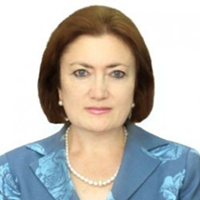
Doctor of Philology, Professor, Head, Department of Russian Language and General Linguistics, Kabardino-Balkarian State University named after H. M. Berbekov.
Postal address: 173 Chernyshevsky St., Nalchik, 360004, Russia.
E-mail: bfo-pdo@mail.ru
-
Uldanai M. Bakhtikireeva Kabardino-Balkarian State University, Peoples' Friendship University of Russia

Doctor of Philology, Professor, Visiting Professor, Kabardino-Balkarian State University named after Kh. M. Berbekov;
Professor, Department of Russian Language and Intercultural Communication, Institute of the Russian Language, RUDN University.
Postal addresses: 173 Chernyshevsky St., Nalchik, 360004, Russia; 10A Miklukho-Maklaya St., Moscow, 117198, Russia.
E-mail: uldanai@mail.ru
Supporting Agencies
License

This work is licensed under a Creative Commons Attribution-NonCommercial 4.0 International License.

Author(s) license holder(s) grant rights for their work to the journal (grantee of a license) under the simple non-exclusive open license in accordance with Art. 1286.1 «Open license for a research work, work of literature or fine arts», Civil Code of the Russian Federation.
New Research of Tuva publishes articles under the Creative Commons Attribution-NonCommercial license (CC BY-NC).
Since it is an open license, author(s) reserve the right to upload the article to their institutional repository, submit it to another journal (if it allows republications), or republish it on their own website (in full, or in part).
However, several conditions apply here:
a) The republished version must always contain the name(s) and affiliation(s) of the author(s), the original title and the hyperlink to the original version on the New Research of Tuva website;
b) It must be in open access, free of charge, and no category of readers must be in any way whatsoever advantaged over general readership.
c) should the contribution be submitted elsewhere by its author(s) without substantial modification (30% or more of original text unchanged), the body of the article should contain a disclaimer that the original version was published in New Research of Tuva (with a link to the respective page)
The CC-BY-NC is a non-revocable license which applies worldwide and lasts for the duration of the work’s copyright.