
The Concept of Aiyu ‘Bear’ in the Karachay-Balkar Linguoculture
DOI:
https://doi.org/10.25178/nit.2026.2.15Keywords:
Karachay-Balkar language, cultural concept, zoonym, aiyu, bear, Karachay-Balkar folkloreAbstract
The article examines the concept of “aiyu” ‘bear’ in the Karachay-Balkar linguoculture. Its lexical and semantic features are analyzed. The lexeme derives from a common Old Turkic root, which relates it to similar designations in other Turkic languages.
“Aiyu” constitutes a significant element of the zoomorphic cultural code in the Karachay-Balkar worldview. This is reflected in the analyzed material, including folk epithetic nominations, terms denoting gender and age, phraseological units, phytonyms, proverbs and sayings, as well as texts of tales and myths.
The concept reveals a multilayered structure manifested in the presence of several qualitatively distinct components: conceptual, figurative, and axiological layers. The most significant associative features and figurative meanings are identified and described, along with their representation in phraseological units, anthroponyms, phytonyms, and toponyms.
It is noted that, within the hierarchy of wild animals, the bear occupies a much higher position than others, functioning as a totemic animal. It is portrayed as a predatory creature distinguished by specific dietary preferences and a particular way of life. It is characterized by strength, foolishness, and at the same time intelligence, as well as affection for its offspring. The language demonstrates a metaphorical transfer “bear → human”, whereby a person acquires characteristics attributed to the bear, such as cunning, wildness, strength, and others.
References
Alekseeva, E. P. (1985) On the semantics of the ornamentation of clay and metal products from archaeological sites of Karachay-Cherkessia and on certain cults. In: Problema arkheologii i istoricheskoi etnografii Karachaevo-Cherkesii, ed. by E. P. Alekseeva. Cherkessk, KChNII. 207 p. Pp. 35–51. (In Russ).
Burnakov, V. A. (2012) The bear in the traditional worldview of the Khakas. Vestnik NGU. Seriya: Istoriya, filologiya, vol. 11, no. 3, Archaeology and ethnography, pp. 325–339. (In Russ).
Butanaev, V. Ya. (2000) The bear in the views of the Khakas, in Peoples of Siberia: History and culture. The bear in ancient and modern cultures of Siberia, eds. by I. N. Gemuev, N. A. Alekseev and I. V. Oktyarskaya. Novosibirsk, IAET SO RAN Publ. 104 p. Pp. 65–67. (In Russ).
Bukharova, G. Kh. (2012) The concept horse in the Bashkir linguoculture (based on the material of the Bashkir mythological epos). Voprosy kognitivnoi lingvistiki, no. 2 (031), pp. 51–60. (In Russ).
Bukharova, G. Kh. (2015) The zoomorphic cultural code in modelling the landscape and its reflection in Bashkir toponymy. Rossiiskii gumanitarnyi zhurnal, vol. 4, no. 6, pp. 487–495. (In Russ).
Wierzbicka, A. (1996) Language. Culture. Cognition, ed. and comp. by M. A. Krongauz, introd. by E. V. Paducheva. Moscow, Russkiye slovari. 411 p. (In Russ).
Voloshina, S. V. (2020) Representation of the concept “Bear” in dialect discourse, Vestnik Tomskogo gosudarstvennogo universiteta. Filologiya, no. 65, pp. 30–46. (In Russ). DOI: https://doi.org/10.17223/19986645/65/2
Vorkachev, S. G. (2013) Selected works on the theory of the linguocultural concept. Volgograd, Paradigma. 167 p. (In Russ).
Glotova, E. A. and Artemyeva, K. V. (2020) National and cultural conditioning of the semantics of the zoonym “bear”. Vestnik Omskogo gosudarstvennogo pedagogicheskogo universiteta. Gumanitarnye issledovaniya, no. 2 (27), pp. 77–80. (In Russ). DOI: https://www.doi.org/10.36809/2309-9380-2020-27-77-80
Karasik, V. I. (2002) The language circle: Personality, concepts, discourse. Volgograd, Peremena. 477 p. (In Russ).
Kutyeva, M. V. (2022) Bear: Ambivalence of the archetype in Russian linguoculture. Yazykoznanie. Vestnik Omskogo gosudarstvennogo pedagogicheskogo universiteta. Gumanitarnye issledovaniya, no. 2 (35), pp. 93–99. (In Russ). DOI: https://doi.org/10.36809/2309-9380-2022-35-93-99l
Likhachev, D. S. (1997) The concept sphere of the Russian language, in Russkaya slovesnost’: ot teorii slovesnosti k strukture teksta: antologiya, ed. by V. P. Neroznak. Moscow, Academia. 317 p. Pp. 147–165. (In Russ).
Maslov, A. S. (2013) The use of the invectiveness index in the characterization of zoometaphors in the modern Russian language. Nauchnye vedomosti. Seriya: Gumanitarnye nauki, no. 13 (156), issue 18, pp. 51–58. (In Russ).
Mashukov, Z. Kh., Yakimov, A. V., Zhappueva, L. Kh. and Zakureev, A. R. (2013) The Caucasian brown bear (Ursus arktos meridionalis Middendorff, 1851) in the conditions of the Nalchik State Experimental Hunting Farm (Kabardino-Balkaria, Central Caucasus). Vestnik Adygeiskogo gosudarstvennogo universiteta. Seriya: Estestvenno-matematicheskie i tekhnicheskie nauki, no. 1 (116), pp. 47–53. (In Russ).
Mokshina, E. N. (2012) The image of the bear in the religious and mythological beliefs of the Mordvins and other Finno-Ugric peoples. Sotsialno-politicheskie nauki, no., pp. 16–19. (In Russ).
Potapov, L. P. (1928) Survivals of the bear cult among the Altai Turks. Etnograf-issledovatel, no. 2–3, pp. 15–28. (In Russ).
Skryabina, A. A. (2016) The concept “Ehe/Bear” in the Yakut linguistic worldview. In: Linguoculture and the conceptual space of language. Ser. “Kontseptualnyi i lingvalnyi miry”, eds. by O. N. Morozova, M. V. Pimenova. Saint Petersburg, Izd-vo Sankt-Peterburgskogo gos. ekonomicheskogo un-ta. 554 p. Pp. 207–212. (In Russ).
Stepanov, Yu. S. (2001) Constants. Dictionary of Russian culture, 2nd ed. Moscow, Akademicheskii Proekt. 990 p. (In Russ).
Tekhov, B. V. (1971) Essays on the ancient history of archaeology of South Ossetia. Tbilisi, Metsniereba. 295 p. (In Russ).
Fomin, E. V. (2022) The image of the bear in Chuvash culture. Etnicheskaya kultura, vol. 4, no. 4, pp. 62–65. (In Russ). DOI: https://doi.org/10.31483/r-103500
Khe, V. Kh. (2010) The cult of animals among the peoples of the Caucasus as a source of information on the theriofauna of the studied region. Vestnik Stavropolskogo gosudarstvennogo universiteta, no. 69 (4), pp. 230–237. (In Russ).
Yurkov, E. E. (2012) Metaphor in the aspect of linguoculturology. Saint Petersburg, Mir russkogo slova. 254 p. (In Russ).
Downloads
Published
Issue
Section
How to Cite
For citation:
Akhmatova M. A., Ketenechiev M. B. and Khubolov S. M. The Concept of Aiyu ‘Bear’ in the Karachay-Balkar Linguoculture. New Research of Tuva, 2026, no. 2, pp. 234-244 (In Russ.). DOI: https://doi.org/10.25178/nit.2026.2.15
Author Biographies
-
Mariam A. Akhmatova Kabardino-Balkarian State University named after H. M. Berbekov

Doctor of Philological Sciences, Associate Professor, Professor of the Department of Karachay-Balkarian Philology, Social and Humanitarian Institute, Kabardino-Balkarian State University named after Kh. M. Berbekov.
Postal address: 173 Chernyshevskogo St., 360004, Nalchik, Russia.
E-mail: mari.ahmatova@yandex.ru
-
Mussa B. Ketenechiev Kabardino-Balkarian State University named after H. M. Berbekov
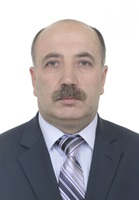
Doctor of Philology, Professor, Professor of the Department of Karachay-Balkarian Philology, Social and Humanitarian Institute, Kabardino-Balkarian State University named after Kh. M. Berbekov.
Postal address: 173 Chernyshevskogo St., 360004, Nalchik, Russia.
E-mail: ketenchiev@mail.ru
-
Sakhadin M. Khubolov Kabardino-Balkarian State University named after H. M. Berbekov

Candidate of Philological Sciences, Associate Professor, Associate Professor of the Department of Karachay-Balkarian Philology, Social and Humanitarian Institute, Kabardino-Balkarian State University named after Kh. M. Berbekov.
Postal address: 173 Chernyshevskogo St., 360004, Nalchik, Russia.
E-mail: khubol@yandex.ru
License

This work is licensed under a Creative Commons Attribution-NonCommercial 4.0 International License.

Author(s) license holder(s) grant rights for their work to the journal (grantee of a license) under the simple non-exclusive open license in accordance with Art. 1286.1 «Open license for a research work, work of literature or fine arts», Civil Code of the Russian Federation.
New Research of Tuva publishes articles under the Creative Commons Attribution-NonCommercial license (CC BY-NC).
Since it is an open license, author(s) reserve the right to upload the article to their institutional repository, submit it to another journal (if it allows republications), or republish it on their own website (in full, or in part).
However, several conditions apply here:
a) The republished version must always contain the name(s) and affiliation(s) of the author(s), the original title and the hyperlink to the original version on the New Research of Tuva website;
b) It must be in open access, free of charge, and no category of readers must be in any way whatsoever advantaged over general readership.
c) should the contribution be submitted elsewhere by its author(s) without substantial modification (30% or more of original text unchanged), the body of the article should contain a disclaimer that the original version was published in New Research of Tuva (with a link to the respective page)
The CC-BY-NC is a non-revocable license which applies worldwide and lasts for the duration of the work’s copyright.