
Linguistic Geography of Coloгr: Structural Types of Kazakh and Tuvan Toponyms
DOI:
https://doi.org/10.25178/nit.2026.2.9Keywords:
toponymy, Tuvan language, Kazakh language, Turkic language, colour termAbstract
The article examines the geographical distribution of colour terms in Kazakh and Tuvan toponymic traditions as a significant fragment of the Turkic linguistic worldview. It identifies and compares structural models of toponyms with a color component in the Kazakh and Tuvan languages, and describes their morphological organization, semantic functions, and symbolic load. The study is based on a systematized corpus of Kazakh and Tuvan toponyms recorded in ethnolinguistic descriptions, topographic sources, and fieldwork notes.
It is established that in both traditions the basic and most productive pattern is the model “colour + geographical term”, which reflects the direct connection between naming practices, natural landscape, and spatial orientation. In the structure of toponyms, common Turkic colour bases such as aq/ak, kök/kök, qara/kara, qyzyl/kyzyl actively function, forming stable nominative types.
The Kazakh toponymic system is characterized by more pronounced derivational variability and a capacity for nuanced semantic differentiation of colour components, which is linked to the broad territorial scope and diversity of natural conditions. Tuvan toponymy, in turn, demonstrates a higher degree of localization in naming practices, a close correlation with specific natural realities, and retains elements of a foreign, primarily Mongolic, substrate influence.
The article concludes that colour components in Kazakh and Tuvan toponymy perform not only a descriptive but also a symbolic and cultural function, reflecting ways of conceptualizing space, the natural environment, and ethnic identity.
References
Abdirakhmanov, A. (1975) Toponymy and etymology. Alma-Ata, Nauka. 256 p. (In Russ. and Kaz.)
Grach, A. D. (1980) Ancient nomads in the centre of Asia. Moscow, Nauka. 256 p. (In Russ.)
Grumm-Grzhimailo, G. E. (2007) Western Mongolia and the Uryankhai region: An anthropological and ethnographic sketch of these lands. In: Uryankhai. Tuva depter. Anthology of scholarly and educational thought about the ancient land of Tuva and its inhabitants, about Uryankhai — Tannu-Tuva, the Uryankhai — Tuvans, and the antiquities of Tuva, in 7 vols. Comp. by S. K. Shoigu. Moscow, Slovo. Vol. 2. Tribes of the Sayan–Altai. The Uryankhai (4th c. — early 20th c.). 664 p. Pp. 496–639. (In Russ.)
Dzhanuzakov, T. (1982) Essay on Kazakh onomastics. Alma-Ata, Nauka. 176 p. (In Russ.)
Kaidar, A. (2013) Kazakhs in the world of the native language. An ethnolinguistic dictionary. Almaty, Sardar. Vol. III. Nature. 608 p. (In Russ. and Kaz.)
Katanov, N. F. (2011) Essays on the Uryankhai land. Diary of a journey undertaken in 1889. Kyzyl, TIGI under the Government of the Republic of Tuva. 383 p. (In Russ.)
Kormushin, I. V. (1997) Turkic Yenisei epitaphs: Texts and studies. Moscow, Nauka. 303 p. (In Russ.)
Kormushin, I. V. (2008) Turkic Yenisei epitaphs: Grammar and textology. Moscow, Nauka. 342 p. (In Russ.)
Mannai-ool, M. Kh. (1961) Archaeological research in the Ovyur district in 1960. In: Uchenye zapiski TNIYALI, iss. IX. Eds. by N. A. Serdobov et al. Kyzyl, Tipografiya Upravleniya kultury. 283 p., pp. 222–229. (In Russ.)
Nurmaghambetuly, A. (1994) The name of the land and water is a letter of history. Almaty, Balausa. 64 p. (In Russ. and Kaz.)
Nurzhekeev, B. (1984) A land adorned with rivers. Almaty, Zhalyn. 248 p. (In Russ. and Kaz.)
Ondar, B. K. (2008) Tuvan toponymy. A comparative analysis of the toponymy of Tuva with that of Southern Siberia and other Turkic-speaking territories. Kyzyl, Tuvan Book Publishing House. 296 p. (In Russ.)
Ondar, B. K. (2007) Toponymic dictionary of Tuva. 2nd ed. Kyzyl, Tuvan Book Publishing House. 550 p. (In Russ.)
Ondar, B. K. (1995) A concise dictionary of the hydronyms of Tuva. Kyzyl, Tuvan Book Publishing House. 48 p. (In Russ.)
Sat, Sh. Ch. (1969) Notes on the toponymy of Tuva. In: Ethnogenesis of the peoples of Northern Asia, conference (1969, Novosibirsk). Proceedings of the conference “Ethnogenesis of the peoples of Northern Asia”. Ed. E. I. Ubryatova. Novosibirsk, s. n. 247 p. Pp. 232–234. (In Russ.)
Suvandii, N. D. (2019) Toponyms with colour terms in the Tuvan language. New Research of Tuva, no. 4, pp. 195–206. (In Russ.) DOI: https://doi.org/10.25178/nit.2019.4.16
Tatarintsev, B. I. (1977) Local geographical terms of North-Eastern Tuva. Sovetskaya tyurkologiya, no. 5, pp. 18–26. (In Russ.)
Downloads
Published
Issue
Section
How to Cite
For citation:
Burkitbayeva Sh. D., Tuimebayev Zh. K., Toxeitova A. E. and Sadykova R. K. Linguistic Geography of Colour: Structural Types of Kazakh and Tuvan Toponyms. New Research of Tuva, 2026, no. 2, pp. 127-147. (In Russ.). DOI: https://doi.org/10.25178/nit.2026.2.9
Author Biographies
-
Shynaray D. Burkitbayeva Farabi University
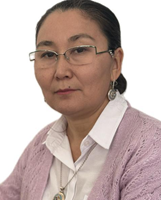
PhD, Acting Associate Professor, Department of Turkology and Language Theory, Farabi University.
Postal address: 71, Al-Farabi Ave., 050000, Almaty, Republic of Kazakhstan.
E-mail: burkitbaeva.1975@mail.ru
-
Zhanseit K. Tuimebayev Farabi University

Doctor of Philology, Professor, Rector, Farabi University.
Postal address: 71, Al-Farabi Ave., 050000, Almaty, Republic of Kazakhstan.
E-mail: turkology.ri@gmail.com
-
Aidana E. Toxeitova Farabi University

Doctoral Student, Department of Turkish Studies and History of the East, Farabi University.
Postal address: 71, Al-Farabi Ave., Almaty, 050000, Kazakhstan.
E-mail: aydana.ergalikizi@gmail.com
Scientific supervisor — Sh. D. Burkitbayeva, PhD, Acting Associate Professor.
-
Roza K. Sadykova Kazakh National Women's Teacher Training University

Candidate of Philological Sciences, Senior Lecturer, Department of Professional Training in Foreign Languages, Kazakh National Women’s Teacher Training University.
Postal address: 114/1 Gogolya St., Almaty, 050000, Kazakhstan.
E-mail: rsadykova516@gmail.com
License

This work is licensed under a Creative Commons Attribution-NonCommercial 4.0 International License.
Author(s) license holder(s) grant rights for their work to the journal (grantee of a license) under the simple non-exclusive open license in accordance with Art. 1286.1 «Open license for a research work, work of literature or fine arts», Civil Code of the Russian Federation.
New Research of Tuva publishes articles under the Creative Commons Attribution-NonCommercial license (CC BY-NC).
Since it is an open license, author(s) reserve the right to upload the article to their institutional repository, submit it to another journal (if it allows republications), or republish it on their own website (in full, or in part).
However, several conditions apply here:
a) The republished version must always contain the name(s) and affiliation(s) of the author(s), the original title and the hyperlink to the original version on the New Research of Tuva website;
b) It must be in open access, free of charge, and no category of readers must be in any way whatsoever advantaged over general readership.
c) should the contribution be submitted elsewhere by its author(s) without substantial modification (30% or more of original text unchanged), the body of the article should contain a disclaimer that the original version was published in New Research of Tuva (with a link to the respective page)
The CC-BY-NC is a non-revocable license which applies worldwide and lasts for the duration of the work’s copyright.