
Social Well-Being under the Engel’s Law Paradox: An Institutional Analysis Based on Sociological Research in the Republic of Tuva
DOI:
https://doi.org/10.25178/nit.2026.3.16Keywords:
social well-being, Engel’s law, poverty, material self-assessment, subjective well-being, institutional analysis, social institution, standard of living, quality of life, Republic of TuvaAbstract
The article examines the phenomenon of social well-being of the population of the Republic of Tuva in the context of the Engel’s law paradox—a situation in which a high share of expenditures on basic needs (an indicator of poverty according to Engel’s law) coexists with a relatively positive subjective perception of life.
The study explains why, despite low objective indicators of living standards (high poverty rates and low incomes), the surveyed sample demonstrates a comparatively high level of life satisfaction. Within an institutional framework, the analysis draws on data from sociological surveys conducted in the republic in 2021 ( ) and 2025 (
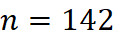 ), as well as statistical indicators (poverty rates and the structure of Tuva’s economy). It is shown that most respondents positively assess their lives and are adapted to conditions of low material provision, which contradicts expectations derived from Engel’s law.
The results include distributions of respondents’ incomes and self-assessments, as well as indicators of social sentiment (social well-being). The discussion focuses on institutional factors: traditional ways of life and family ties, state support (social benefits), and limited material consumption “standards,” which together mitigate the negative impact of poverty on subjective well-being. Despite the generally positive social well-being, vulnerable groups are identified (for example, women more often report feelings of loneliness and anxiety).
The article emphasizes the importance of a comprehensive consideration of both objective and subjective indicators of quality of life and formulates recommendations for strengthening institutions aimed at improving living standards in the region without compromising social well-being.
References
Acemoglu, D. and Robinson, J. (2015) Why nations fail: The origins of power, prosperity, and poverty. Moscow, AST. 693 p. (In Russ.)
Anisimova, T. G. (2023) Structural features of the social well-being of the population of Tuva: Gender aspect. Gumanitariy Yuga Rossii, no. 3, pp. 13–21. (In Russ.)
Anisimova, T. G., Golenkova, Z. T., Kubyakin, E. O. and Plotnikov, V. V. (2022) Socio-economic factors of self-realization of residents of the Republic of Tuva in the cultural and educational spheres. Vlast, no. 6, pp. 130–140. (In Russ.) DOI: https://doi.org/10.31171/vlast.v30i6.9367
Anishchenko, A. N. and Usmanov, D. I. (2023) Changes in the structure of nutrition of the population of Russian regions as a threat to food security. Kreativnaya ekonomika, vol. 17, no. 11, pp. 4291–4308. (In Russ.) DOI: https://doi.org/10.18334/ce.17.11.119652
Baymurzina, G. R. and Kabashova, E. V. (2022) Employment and income of the population of the Republics of Tuva and Bashkortostan (2010–2020). New Research of Tuva, no. 3, pp. 186–207. (In Russ.) DOI: https://doi.org/10.25178/nit.2022.3.13
Belopashentseva, P. V. (2023) Official and subjective poverty in Russia: The impact of the events of 2020–2021. Sotsiologicheskie issledovaniya, no. 10, pp. 78–90. (In Russ.) DOI: https://doi.org/10.31857/S013216250028306-9
Bolat-ool, Ch. K., Kanzynvaa, S. O., Khovalyg, N. A. and Kuular, E. A. (2025) State and dynamics of animal husbandry in the Republic of Tuva. Vestnik Izhevskoy gosudarstvennoy sel’skokhozyaystvennoy akademii, no. 2 (82), pp. 105–112. (In Russ.) DOI: https://doi.org/10.48012/1817-5457_2025_2_105-112
Zubarevich, N. V., Makarentseva, A. O. and Mkrtchyan, N. V. (2020) Socio-economic situation of regions and demographic results of 2019 (based on the results of regular monitoring by INSAP RANEPA). Ekonomicheskoe razvitie Rossii, vol. 27, no. 4, pp. 73–87. (In Russ.)
Zubarevich, N. V. and Safronov, S. G. (2019) The share of food products in the expenditure structure of the population of Russian regions as an indicator of the standard of living and the modernization of consumption. Vestnik Moskovskogo universiteta. Seriya 5: Geografiya, no. 2, pp. 61–68. (In Russ.)
Lepeshkin, S. A. (2020) Social well-being: Indicators, types, and forms. Vestnik Moskovskogo gorodskogo pedagogicheskogo universiteta. Seriya: Filosofskie nauki, no. 3 (35), pp. 100–107. (In Russ.)
Mongush, O. N. and Oyun, A. O. (2023) Dynamics of socio-economic development indicators of the Republic of Tuva. Vestnik Tuvinskogo gosudarstvennogo universiteta. Sotsial’nye i gumanitarnye nauki, no. 4, pp. 61–69. (In Russ.)
Monitoring of incomes and living standards of the population of Russia — 2024 (2025) / Bobkov, V. N., Gulyugina, A. A., Odintsova, E. V. et al. Issue 3 (204). Moscow, IEA RAN. 170 p. (In Russ.)
Natsak, O. D. (2022) Material self-assessment of residents of the Republic of Tuva in the context of poverty research (based on sociological studies). Uroven’ zhizni naseleniya regionov Rossii, vol. 18, no. 1, pp. 64–72. (In Russ.) DOI: https://doi.org/10.19181/lsprr.2022.18.1.10
Nigmatullina, R. A., Gabitova, Z. R., Asapova, A. A. and Sayfutdinova, E. E. (2025) Engel’s law and the Giffen paradox in the formation of the regional basket of consumer expenditures. Ekonomika i upravlenie: nauchno-prakticheskiy zhurnal, no. 6, pp. 62–69. (In Russ.) DOI: https://doi.org/10.34773/EU.2025.6.10
Oorzhak, K. K. (2020) Prospects for the economic development of rural areas of the Republic of Tuva. Ekonomika Tsentral’noy Azii, vol. 4, no. 1, pp. 65–76. (In Russ.) DOI: https://doi.org/10.18334/asia.4.1.111167
Pastukhova, E. Ya., Bel’chik, T. A. and Kochneva, O. P. (2023) Incomes, poverty and consumer expenditures of the population of regions: Long-term trends and factors. Voprosy upravleniya, no. 3 (82), pp. 5–18. (In Russ.)
Popod’ko, G. I. and Gimadeeva, E. N. (2016) Assessment of the development potential of the Republic of Tuva as a problematic region of Russia. Fundamental’nye issledovaniya, no. 8–2, pp. 372–376. (In Russ.)
Samba, A. D.-B., Goliusova, Yu. V., Demidov, A. A., Anan’eva, K. I. and Ondar, N. D. (2024) Sociological portrait of a single-parent family in the Republic of Tuva. New Research of Tuva, no. 1, pp. 184–196. (In Russ.) DOI: https://doi.org/10.25178/nit.2024.1.12
Socio-stratification processes in the Republic of Tuva (2020) / Golenкова, Z. T. et al. Moscow, Kyzyl, FNISTs RAN. 128 p. (In Russ.) DOI: https://doi.org/10.19181/monogr.978-5-89697-332-4.2020
Chemidova, L. S. (2019) Incomes and expenditures of the rural population of the Republic of Kalmykia as an indicator of the standard of living. Byulleten’ Kalmytskogo nauchnogo tsentra RAN, no. 2, pp. 197–211. (In Russ.)
Anker, R. (2011) Engel’s Law Around the World 150 Years Later / Political Economy Research Institute. Working Paper Series. No. 247. Amherst, MA : Political Economy Research Institute, University of Massachusetts Amherst. 45 p.
Chen, M. (2022) Engel’s law in China: Some new evidence. Review of Development Economics, vol. 26, no. 3, pp. 1640–1662. DOI: https://doi.org/10.1111/rode.12887
Chen, X. (2015) Relative deprivation and individual well-being. IZA World of Labor, article 140. DOI: https://doi.org/10.15185/izawol.140
Clark, A. E., Frijters, P. and Shields, M. A. (2007) Relative Income, Happiness, and Utility: An Explanation for the Easterlin Paradox and Other Puzzles. IZA Discussion Papers, no. 2840, pp. 1–65.
Deaton, A. (2018) The Analysis of Household Surveys: A Microeconometric Approach to Development Policy. Reissue edition with a new preface. Washington, DC, World Bank. 479 p. DOI: https://doi.org/10.1596/978-1-4648-1331-3
Diener, E., Suh, E. M., Lucas, R. E. and Smith, H. L. (1999) Subjective well-being: Three decades of progress. Psychological Bulletin, vol. 125, no. 2, pp. 276–302.
Easterlin, R. A. (1974) Does economic growth improve the human lot? Some empirical evidence. In: David, P. A., Reder, M. W. (eds) Nations and Households in Economic Growth: Essays in Honor of Moses Abramovitz. New York, Academic Press. 411 p. Pp. 89–125.
Easterlin, R. A., McVey, L. A., Switek, M., Sawangfa, O. and Zweig, J. S. (2010) The happiness–income paradox revisited. Proceedings of the National Academy of Sciences of the USA, vol. 107, no. 52, pp. 22463–22468. DOI: https://doi.org/10.1073/pnas.1015962107
Engel, E. (1857) Die Productions- und Consumtionsverhältnisse des Königreichs Sachsen. Zeitschrift des statistischen Bureaus des Königlich Sächsischen Ministeriums des Innern, bd. 8, pp. 1–54. (In Germ.).
Jensen, R. T. and Miller, N. H. (2008) Giffen behavior and subsistence consumption. American Economic Review, vol. 98, no. 4, pp. 1553–1577. DOI: https://doi.org/10.1257/aer.98.4.1553
Moon, J., Hwang, J. and Lee, W. S. (2023) Relationship between the Engel Coefficient, Life Satisfaction, and Subjective Health for Senior Citizens in Korea: Moderating Effect of COVID-19. Behavioral Sciences, vol. 13, no. 1, article 22. DOI: https://doi.org/10.3390/bs13010022
Stevenson, B. and Wolfers, J. (2008) Economic growth and subjective well-being: Reassessing the Easterlin paradox. IZA Discussion Paper, no. 3654, pp. 1–102.
Suh, E. M. and Oishi, S. (2002) Subjective well-being across cultures. Online Readings in Psychology and Culture, vol. 10, no. 1. DOI: https://doi.org/10.9707/2307-0919.1076
Zubarevich, N. V. and Safronov, S. G. (2024) Interregional inequality in Russia and post-soviet countries in the 21st century. Regional Research of Russia, vol. 14, no. 4, pp. 513–524.
Downloads
Published
Issue
Section
How to Cite
For citation:
Anisimova T. G., Kubyakin E. O. and Plotnikov V. V. Social Well-Being under the Engel’s Law Paradox: An Institutional Analysis Based on Sociological Research in the Republic of Tuva. New Research of Tuva, 2026, no. 3, pp. 272-289. (In Russ.) DOI: https://doi.org/10.25178/nit.2026.3.16
Author Biographies
-
Tatiana G. Anisimova Institute of Sociology, Federal Center of Theoretical and Applied Sociology, Russian Academy of Sciences

Doctor of Sociological Sciences, Leading Research Fellow, Center for the Study of Social Structure and Social Stratification, Institute of Sociology of the Federal Center of Theoretical and Applied Sociology of the Russian Academy of Sciences.
Postal address: Building 5, 24/35 Krzhizhanovskogo St., 117218, Moscow, Russia.
E-mail: anissimova07@gmail.com
-
Evgeny O. Kubyakin Plekhanov Russian University of Economics

Doctor of Sociological Sciences, Associate Professor; Professor, Department of State and Municipal Administration, Plekhanov Russian University of Economics.
Postal address: 36 Stremyanny Lane, 117997, Moscow, Russia.
E-mail: tspopz@yandex.ru
-
Vladimir V. Plotnikov Plekhanov Russian University of Economics

Doctor of Sociological Sciences, Candidate of Philosophical Sciences, Associate Professor, Professor, Department of State and Municipal Administration, Plekhanov Russian University of Economics.
Postal address: 36 Stremyanny Lane, 117997, Moscow, Russia.
E-mail: sociometriya@mail.ru
License

This work is licensed under a Creative Commons Attribution-NonCommercial 4.0 International License.

Author(s) license holder(s) grant rights for their work to the journal (grantee of a license) under the simple non-exclusive open license in accordance with Art. 1286.1 «Open license for a research work, work of literature or fine arts», Civil Code of the Russian Federation.
New Research of Tuva publishes articles under the Creative Commons Attribution-NonCommercial license (CC BY-NC).
Since it is an open license, author(s) reserve the right to upload the article to their institutional repository, submit it to another journal (if it allows republications), or republish it on their own website (in full, or in part).
However, several conditions apply here:
a) The republished version must always contain the name(s) and affiliation(s) of the author(s), the original title and the hyperlink to the original version on the New Research of Tuva website;
b) It must be in open access, free of charge, and no category of readers must be in any way whatsoever advantaged over general readership.
c) should the contribution be submitted elsewhere by its author(s) without substantial modification (30% or more of original text unchanged), the body of the article should contain a disclaimer that the original version was published in New Research of Tuva (with a link to the respective page)
The CC-BY-NC is a non-revocable license which applies worldwide and lasts for the duration of the work’s copyright.