
The Concept of ааһ ‘piala’ in the Linguoculture of the Kalmyks
DOI:
https://doi.org/10.25178/nit.2025.4.22Keywords:
Kalmyks; Kalmyk language; Kalmyk culture; material culture; concept of culture; ааһ; piala; component of a conceptAbstract
The present article analyzes “ааһ” ‘piala’ (“bowl”/“cup”) as a concept of Kalmyk linguoculture. The theoretical and methodological basis of the study comprises the principles of Russian linguistic conceptology. The source material consisted of language data extracted through continuous sampling from existing lexicographic sources on the Kalmyk language, dictionaries of related languages, as well as essay materials recorded from Kalmyk respondents in July 2025 in Elista (Kalmykia).
It is established that in the Kalmyk language, the concept of “ааһ” ‘piala’ exhibits variability of expression, characterizing “ааһ” in terms of a) material, b) form, c) size, d) function. In contemporary Kalmyk speech, the most frequently used denotations are the lexemes “ааh” and “shaazn”, with the name of the concept itself being “ааh”. The core of the concept is the lexeme “ааh”; systemic synonyms include “tsӧgts”, “shaazn”; the periphery consists of “badr”, “mandl”, “savl”, “tagsh”, “tsoma”, and “tsar”.
The conceptual content of “ааh” includes: a cup intended for tea, for offering on an altar, made of wood, porcelain, or faience. The perceptive and figurative aspect of the concept is a whole, clean cup filled to the brim with tea, associated with happiness. The value component is inextricably linked to the contents of “ааh” — “tsä” ‘tea,’ which is classified as “tsakhan idän” ‘white, auspicious food’, and this underscores the importance of the concept in Kalmyk culture. This explains the use of «ааһ» in the daily life of the Kalmyks, in significant rituals, customs, behavioral codes, and texts. Among contemporary Kalmyks, “modn ааһ”, “mӧngn ааh”, “agch ааh” are associated with the nomadic past of the people, with male herders and warriors; “tsӧgts ааһ” — with the spiritual sphere.
The concept of “ааh” ‘piala’ reflects features of the nomadic life of the Kalmyks, their natural environment, beliefs, interactions with other peoples, and mindset. The concept has undergone a prolonged process of “enlanguaging” and conceptualization in linguoculture, while retaining its status as a deeply ethnic, culturally significant symbol.
References
Ataeva, F. Sh. (2017) On some names of dishes and kitchenware in the Nogai language. Filologicheskie nauki. Voprosy teorii i praktiki, no. 1(67), pp. 74–77. (In Russ.)
Balzhinimaeva, B. D. (2017) Names of leather containers and vessels in Mongolic languages. Oriental Studies, no. 3, pp. 110–114. (In Russ.)
Budazhapova, L. B. (2012) Buddhist Terms in Contemporary Buryat Language. Ed. by E. R. Radnaev. Ulan-Ude, Buryat State University. 104 p. (In Russ.)
Budazhapova, L. B. and Kharanutova, D. Sh. (2023) Borrowed Buddhist vocabulary in the Mongolic languages. Sociolinguistics, no. 2 (14), pp. 64–78. (In Russ.)
Vorkachev, S. G. (2004) Happiness as a Linguocultural Concept. Moscow, Gnosis. 236 p. (In Russ.)
Esenova, T. S. (2012) Tsä / Tea. In: Essays on the Linguoculture of the Kalmyks. Ed. by G. Ts. Pyurbeev. Elista, Kalmyk University Press. 159 p. Pp. 84–101. (In Russ.)
Esenova, T. S. and Esenova, G. B. (2012) Eejin tsä as a precedent phenomenon of Kalmyk linguoculture. Uralo-Altaiskie issledovaniya, no. 2, pp. 7–14. (In Russ.)
Esenova, T. S. and Esenova, G. B. (2025) Denotations of Buddhist clergymen in the Kalmyk language. In: Language, Folklore, Literature of Mongolic Peoples in the Context of Traditional Culture. Eds. by E. P. Bakaeva et al. Elista, Kalmyk Scientific Center RAS. 188 p. Pp. 64–69. (In Russ.)
Zamaletdinov, R. R. and Khusnullina, G. N. (2014) Linguocultural features of dish and kitchenware names in the Tatar language. Philology and Culture, no. 4 (38), pp. 95–100. (In Russ.)
Zhukovskaya, N. L. (1988) Categories and Symbolism in the Traditional Culture of the Mongols. Moscow, Nauka. 195 p. (In Russ.)
Karasik, V. I. (2009) Linguistic Keys. Moscow, Gnosis. 405 p. (In Russ.)
Karbusheva, I. V. and Lidzhiev, A. B. (2021) Metaphoric images of kitchenware and dish vocabulary in Mongolic languages. Vestnik Instituta, no. 2(43), pp. 104–108. (In Russ.)
Krasavsky, N. A. (2001) Emotional Concepts in German and Russian Linguocultures. Volgograd, Peremena. 495 p. (In Russ.)
Kuular, E. M. (2012) The Southeastern Dialect of Tuvan Language. Kyzyl, RIO TuvGU. 213 p. (In Russ.)
Lamazhaa, Ch. K. (2023) Cultural Concepts: Form, Idea, Social Regulation. New Research of Tuva, no. 1, pp. 6–25. (In Russ.) DOI: https://doi.org/10.25178/nit.2023.1.1
Nurmukhametova, R. S. (2014) Word-formation features of culinary vocabulary in Tatar language. Filologicheskie nauki. Voprosy teorii i praktiki, no. 10 (40), pp. 121–123. (In Russ.)
Nurmukhametova, R. S. and Khusnullina, G. N. (2016) National-cultural specifics of Tatar tea drinking: names of dishes and food. Filologicheskie nauki. Voprosy teorii i praktiki, no. 9, pp. 156–158. (In Russ.)
Radlov, V. V. (1893) A Dictionary of Turkic Dialects. Saint Petersburg, Imperial Academy of Sciences, 320 pp. (In Russ.)
Rassadin, V. I. (2017) Common Mongolic vocabulary in the category of interior, household goods and dishes in Khakas, Buryat and Kalmyk languages. Vestnik Kalmytskogo universiteta, vol. 33, no. 1, pp. 97–101. (In Russ.)
Rassadin, V. I., Trofimova, S. M. and Tuvshintogs, B. (2017) Turko-Mongolic parallels among material culture terms in Mongolic languages (clothing, housing, home utensils). Izvestiya Volgogradskogo gosudarstvennogo pedagogicheskogo universiteta, no. 2 (115), pp. 101–106. (In Russ.)
Rassadin, V. I. and Tsirenova, D. B. (1996) Vocabulary of Material Culture of Okinskie Soyots. In: Problems of Buryat Dialectology. Ed. by V. I. Rassadin. Ulan-Ude, BSC RAS SB RAS. 159 p. Pp. 58–99. (In Russ.)
Sangadzhieva, D. V. (2024) Artistic Decoration of Wooden Items in the Decorative Applied Art of Kalmykia: Traditions and Modernity. Nasledie vekov, no. 1 (37), pp. 97–112. (In Russ.)
Slyshkin, G. G. (2004) Linguocultural Concepts and Metaconcepts. Volgograd, Peremena. 340 p. (In Russ.)
Stepanov, Yu. S. (2004) Constants. Dictionary of Russian Culture. Moscow, Akademicheskii Proekt. 3rd ed. 992 p. (In Russ.)
Stepanov, Yu. S. (2007) Concepts. The Thin Film of Civilization. Moscow, Languages of Slavic Culture. 246 p. (In Russ.)
Khairutdinova, T. Kh. (2000) Everyday Vocabulary in Tatar Language (dishes, utensils, household items). Kazan, Fiker. 128 p. (In Russ.)
Kharanutova, D. Sh., Budazhapova, L. B. and Baikalov, N. S. (2023) Borrowed Buddhist vocabulary of the Buryat language in historical-linguistic perspective. Mongolovedenie, vol. 15, no. 4, pp. 742–756. (In Russ.)
Khusnullina, G. N. (2016) Ways of forming names for dishes and kitchenware in the Tatar language. Philology and Culture, no. 4 (46), pp. 82–86. (In Russ.)
Shagdarov, L. D. (2011) The Buddhist Lexical System in Modern Buryat Literary Language. Vestnik BNC SO RAN, no. 3, pp. 177–184. (In Russ.)
Shagdarova, D. L. (2016) Buddhist vocabulary and terminology and the problem of their translation. Filologicheskie nauki. Voprosy teorii i praktiki, no. 3–1(57), pp. 192–195. (In Russ.)

Published
How to Cite
For citation:
Esenova G. B. and Esenova T. S. The Concept of ааһ ‘piala’ in the Linguoculture of the Kalmyks. New Research of Tuva, 2025, no. 4, pp. 417-435. (In Russ.). DOI: https://doi.org/10.25178/nit.2025.4.22
Issue
Section
Author Biographies
Galina B. Esenova, Kalmyk State University named after B. B. Gorodovikov

Candidate of Philology, Leading Specialist, Scientific Department, Kalmyk State University named after B. B. Gorodovikov.
Postal address: 11 Pushkina St., Elista, 358000, Russia.
E-mail: esenova_gb@gmail.com
Tamara S. Esenova, Kalmyk State University named after B. B. Gorodovikov
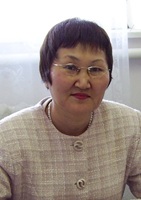
Doctor of Philology, Professor, Department of Russian Language and General Linguistics, Russian and Foreign Literature, Faculty of Humanities, Kalmyk State University named after B. B. Gorodovikov.
Postal address: 11 Pushkina St., Elista, 358000, Russia.
E-mail: esenova_ts@mail.ru

This work is licensed under a Creative Commons Attribution-NonCommercial 4.0 International License.

Author(s) license holder(s) grant rights for their work to the journal (grantee of a license) under the simple non-exclusive open license in accordance with Art. 1286.1 «Open license for a research work, work of literature or fine arts», Civil Code of the Russian Federation.
New Research of Tuva publishes articles under the Creative Commons Attribution-NonCommercial license (CC BY-NC).
Since it is an open license, author(s) reserve the right to upload the article to their institutional repository, submit it to another journal (if it allows republications), or republish it on their own website (in full, or in part).
However, several conditions apply here:
a) The republished version must always contain the name(s) and affiliation(s) of the author(s), the original title and the hyperlink to the original version on the New Research of Tuva website;
b) It must be in open access, free of charge, and no category of readers must be in any way whatsoever advantaged over general readership.
c) should the contribution be submitted elsewhere by its author(s) without substantial modification (30% or more of original text unchanged), the body of the article should contain a disclaimer that the original version was published in New Research of Tuva (with a link to the respective page)
The CC-BY-NC is a non-revocable license which applies worldwide and lasts for the duration of the work’s copyright.