Customs of the Altaians Related to the Status of the Umbilical Mother (Second Half of the 20th — Early 21st Century)
DOI:
https://doi.org/10.25178/nit.2026.3.8Keywords:
Altaians, childbirth rituals, kin-ene, kindik-ene, umbilical mother, childhood cultureAbstract
The article examines the customs of the Altaians associated with the status of kin-ene, i.e., the umbilical mother—the woman who assisted in childbirth and was the first to “receive” the child into this world. The materials were collected by the author in Southern and Central Altai in 2024–2025 and are preserved in the scientific archive of the S. S. Surazakov Research Institute of Altaistics in Gorno-Altaisk (Altai Republic, Russia). The chronological framework of the study covers the second half of the 20th to the early 21st century.
Customs related to kin-ene are virtually absent in the works of pre-revolutionary scholars, although they were later described by ethnographers during the Soviet period. Based on a comparative analysis of ethnographic materials from the Soviet era and contemporary field research, the author demonstrates the preservation of elements of the custom associated with the status of kin-ene.
At present, a woman who is a close relative or a friend of the child’s mother is appointed as kin-ene. Alongside the study of kin-ene, the emergence of the umbilical father (kin-ada) is considered; this role has come to be automatically assumed by the husband of the kin-ene. Cases of the initial designation of a kin-ada have also been recorded; in such instances, his spouse subsequently became the kin-ene.
Ethno-territorial differences in customs related to kin-ene have been identified, as well as their local persistence in the Kosh-Agach District of the Altai Republic. The role of the umbilical mother in the upbringing of the child and in shaping their life trajectory is revealed, as she, alongside the parents, bears responsibility for the formation of the child’s social and cultural values. It is emphasized that the relationship between the umbilical mother (kin-ene) and her child (kin-bala) contributes to strengthening interpersonal ties, enhancing mutual assistance and support in Altaian society.
References
Aiyzhy, E. V. (2014) Ritual practice of the Tuvans: birth of a child and cradle. Vestnik Chuvashskogo gosudarstvennogo pedagogicheskogo universiteta im. I. Ya. Yakovleva, no. 4 (84), pp. 79–85. (In Russ.)
Aiyzhy, E. V. (2015) The category of age and attitudes towards it in the traditional culture of the Tuvans. Kazanskiy pedagogicheskiy zhurnal, no. 5–2 (112), pp. 415–421. (In Russ.)
Altaians: Ethnic history. Traditional culture. Contemporary development (2014) / N. V. Ekeev, N. M. Ekeeva, E. V. Enchinov; ed. by N. V. Ekeev. Gorno-Altaisk, BNU RA “NII altaistiki im. S. S. Surazakova”. 464 p. (In Russ.)
Dilekova, S. D. (2018) Youth and life cycle customs. In: Transformations in society and values of traditional culture in the Altai Republic (late 20th — early 21st centuries) / E. V. Enchinov, N. O. Tadysheva; ed. by N. V. Ekeev. Issue 3. Gorno-Altaisk, BNU RA “NII altaistiki im. S. S. Surazakova”. 288 p. Pp. 160–174. (In Russ.)
D’yakonova, V. P. (2001) Altaians (materials on the ethnography of the Telengits of Mountainous Altai). Gorno-Altaisk, Yuch-Sumer — Belukha. 222 p. (In Russ.)
Enchinov, E. V. (2008) Legal customs associated with pregnancy in the traditional worldview of the Altaians. Mirovozzrenie naseleniya Yuzhnoy Sibiri i Central'noy Azii v istoricheskoy retrospektive, no. 2, pp. 271–277. (In Russ.)
Enchinov, E. V. (2013) Family values of the Altaians: transformation of customary law in contemporary culture. Gorno-Altaisk, Izd-vo IP “Vysotskaya G. G.”. 226 p. (In Russ.)
Karunovskaya, L. E. (1927) From the Altaian beliefs and rituals related to the child. In: Sbornik Muzeya antropologii i etnografii Akademii nauk / ed. by E. F. Karskii. Leningrad, Izdatel’stvo Akademii nauk SSSR, Gosudarstvennaya akademicheskaya tipografiya. Vol. VI. 209 p. P. 19–36. (In Russ.)
Konovalov, A. V. and Shakhanova, N. Zh. (1998) The child in the system of traditional Kazakh rituals (birth and early educational cycles). In: Childhood in the traditional culture of the peoples of Central Asia, Kazakhstan and the Caucasus / ed. by R. R. Rakhimov. St Petersburg, MAE RAN. 229 p. P. 7–36. (In Russ.)
Muytueva, V. A. and Chochkina, M. P. (1996) Altaian faith (Family book). Gorno-Altaisk, Gorno-Altayskaya tipografiya. 207 p. (In Altaian.)
Rituals in the traditional culture of the Altaians / N. V. Ekeev, E. N. Kuz’mina, A. A. Konunov, N. O. Tadysheva; ed. by N. V. Ekeev, scientific ed. E. N. Kuz’mina. Gorno-Altaisk, BNU RA “NII altaistiki im. S. S. Surazakova”. 704 p. (In Russ.)
Pakhratdinov, A. K. (2025) Kindek sheshe: role and functions of the midwife in traditional Karakalpak society. Problemy vostokovedeniya, no. 1 (107), pp. 77–81. (In Russ.)
Potapov, L. P. (1969) Essays on the everyday life of the Tuvans. Moscow, Nauka. 402 p. (In Russ.)
Spodina, V. I. (2009) Materials for the description of the kinship terminology of the Khanty. Izvestiya Volgogradskogo gosudarstvennogo pedagogicheskogo universiteta, no. 2 (36), pp. 97–101. (In Russ.)
Tadina, N. A. (1995) Altaian wedding rituals (19th–20th centuries). Gorno-Altaisk, Izd-vo “Yuch-Syumer — Belukha”. 207 p. (In Russ.)
Tadina, N. A. (2005) Three lines of kinship and avunculate among the Altaians. In: Algebra of kinship. Series Kinship. Kinship systems. Systems of kinship terms. Issue 9 / ed. by V. A. Popov. St Petersburg, Izd-vo Muzeya antropologii i etnografii im. Petra Velikogo (Kunstkamera) RAN. 284 p. P. 255–265. (In Russ.)
Tadina, N. A. (2011) Worldview as the basis of the communicative culture of the Altaians. Vestnik arkheologii, antropologii i etnografii, no. 1 (14), pp. 146–153. (In Russ.)
Tadysheva, N. O. (2011) Influence of Christianization on the family rituals of the indigenous population of Mountainous Altai. Gorno-Altaisk, OAO “Gorno-Altayskaya tipografiya”. 176 p. (In Russ.)
Transformations in society and values of traditional culture in the Altai Republic (late 20th — early 21st centuries). Economic and cultural complex of Mountainous Altai: transformations and traditions (late 20th — early 21st centuries) (2016) / N. V. Ekeev, E. V. Enchinov; ed. by N. V. Ekeev. Gorno-Altaisk, BNU RA “NII altaistiki im. S. S. Surazakova”. 252 p. (In Russ.)
Tyukhteneva, S. P. (1997) The family of the Altaians: past, present, future. In: Family, gender, culture: materials of international conferences 1994–1995 / ed. by V. A. Tishkov. Moscow, Institut etnologii i antropologii RAN. 416 p. P. 239–242. (In Russ.)
Tyukhteneva, S. P. (2006) Social organization and family rituals. In: Turkic peoples of Siberia / ed. by D. A. Funk, N. A. Tomilov. Moscow, Nauka. 678 p. P. 413–428. (In Russ.)
Frazer, J. G. (1980) The golden bough. Moscow, Politizdat. 830 p. (In Russ.)
Chochkina, M. P. (2003) Altaian children’s folklore. Gorno-Altaisk, Izd-vo RIO “GAGU”. 156 p. (In Russ.)
Shatinova, N. I. (1981) The family among the Altaians. Gorno-Altaisk, Gorno-Altayskoe otdelenie Altayskogo knizhnogo izdatel’stva. 184 p. (In Russ.)
Downloads
Published
Issue
Section
How to Cite
For citation:
Uchaikina A. M. Customs of the Altaians Related to the Status of the Umbilical Mother (Second Half of the 20th — Early 21st Century). New Research of Tuva, 2026, no. 3, pp. 108-120 (In Russ.). DOI: https://doi.org/10.25178/nit.2026.3.8
Author Biography
-
Aiaru M. Uchaikina S. S. Surazakov Research Institute of Altaistics
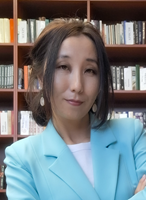
Candidate of Historical Sciences, Senior Researcher, Research Department of History and Ethnography (Ethnology) S. S. Surazakov Research Institute of Altaic Studies.
Postal address: 6 Sotsialisticheskaya St., 649000, Gorno-Altaisk, Russia.
E-mail: aiapoposheva@mail.ru
License

This work is licensed under a Creative Commons Attribution-NonCommercial 4.0 International License.
Author(s) license holder(s) grant rights for their work to the journal (grantee of a license) under the simple non-exclusive open license in accordance with Art. 1286.1 «Open license for a research work, work of literature or fine arts», Civil Code of the Russian Federation.
New Research of Tuva publishes articles under the Creative Commons Attribution-NonCommercial license (CC BY-NC).
Since it is an open license, author(s) reserve the right to upload the article to their institutional repository, submit it to another journal (if it allows republications), or republish it on their own website (in full, or in part).
However, several conditions apply here:
a) The republished version must always contain the name(s) and affiliation(s) of the author(s), the original title and the hyperlink to the original version on the New Research of Tuva website;
b) It must be in open access, free of charge, and no category of readers must be in any way whatsoever advantaged over general readership.
c) should the contribution be submitted elsewhere by its author(s) without substantial modification (30% or more of original text unchanged), the body of the article should contain a disclaimer that the original version was published in New Research of Tuva (with a link to the respective page)
The CC-BY-NC is a non-revocable license which applies worldwide and lasts for the duration of the work’s copyright.