
Identification Strategies of Ethnic Groups in Kazakhstan in the Context of Integration and Globalization (Socio-Economic Aspect)
DOI:
https://doi.org/10.25178/nit.2026.2.18Keywords:
Kazakhstan, Koreans, Germans, adaptation, adaptation strategy, identification strategy, economic integration, entrepreneurial ethosAbstract
The article examines the socio-economic aspects of the identification strategies of ethnic groups of Koreans and Germans in the multi-ethnic society of Kazakhstan. The empirical base consists of statistical data, the results of sociological studies, academic publications, and media materials.
The specific features of the formation of the economic basis of the identification strategies of Germans and Koreans in Kazakhstan are identified and analysed, including ethnic segmentation of employment (Asian ethnic groups predominate in the agrarian sector, European ones in industry, while trade functions as a universal sphere). Two integration models are analysed: the Korean one (network structure, entrepreneurial activity, ties with South Korea, large-scale projects under the aegis of the Association of Koreans of Kazakhstan) and the German one (multiculturalism, social responsibility, support for small and medium-sized businesses). It is argued that the entrepreneurial ethos serves as a key factor of integration, ensuring both economic development and the preservation of cultural identity.
It is concluded that the successful integration models of Koreans and Germans demonstrate the importance of a balance between economic activity and cultural continuity. It is noted that entrepreneurial activity functions as an instrument for consolidating ethnic communities and for their implementation within the matrices of the overarching Kazakhstani national identity.
References
Anayban, Z. V. (2018) Labour employment and socio-professional orientations of the youth of contemporary Tuva. Novye issledovaniya Tuvy, no. 2, pp. 112–131. (In Russ.) DOI: https://doi.org/10.25178/nit.2018.2.6
Balakina, G. F. and Kylgyday, A. Ch. (2015) Ethno-regional models of adaptation to the labour market in Tuva, ed. by L.V. Korel. Kyzyl, TuvIKOPR SO RAN. 160 p. (In Russ.)
Balakina, G. F. and Kylgyday, A. Ch. (2016) Specific features of adaptation of ethnic groups of Tuva to the market economy. Novye issledovaniya Tuvy, no. 2, pp. 73–89. (In Russ.)
Berry, J. W. (2019) Ecocultural psychology. Kulturno-istoricheskaya psikhologiya, vol. 15, no. 4, pp. 4–16. (In Russ.)
Bugai, N. F. (2020) Debatable problems of the forced resettlement of peoples to Kazakhstan and the republics of Central Asia (second half of the 1930s–1940s). Istoricheskaya i sotsialno-obrazovatelnaya mysl, vol. 12, no. 3, pp. 17–33. (In Russ.)
Bufetova, A. N., Kolomak, E. A. and Mikhaleva, M. M. (2017) National diversity and economic development of Russian regions. Mir ekonomiki i upravleniya, vol. 17, no. 3, pp. 143–157. (In Russ.)
Weber, M. (1990) The Protestant ethic and the spirit of capitalism. In: Weber, M. Selected works, transl. from German, comp., ed. and afterword by Yu. N. Davydov, introd. by P. P. Gaidenko. Moscow, Progress. 808 p. Pp. 61–272. (In Russ.)
Gali, D. (2022) Main trends of ethnic economy in Kazakhstan and its prospects. Etnosayasat, no. 3–4, pp. 48–59. (In Russ.) [online] Available at: https://journal.etnosayasat.kz/index.php/etp/article/view/12 (accessed: 29.11.2025).
Dabiev, D. F. (2018) Professional preferences of the population of Tuva in the context of economic culture. Novye issledovaniya Tuvy , no. 2, pp. 132–148. (In Russ.) DOI: https://doi.org/10.25178/nit.2018.2.7
Davletova, G. A. (2023) Deported peoples during the Great Patriotic War to the territory of Kazakhstan. Science of Europe, no. 115, pp. 51–55. (In Russ.)
Dodonov, V. Yu. (2018) Interrelation between ethnic fractionalization and income differentiation of the population in the regions of Kazakhstan. In: Ethno-social processes in the Republic of Kazakhstan: collection of scientific works, ed. by M. S.-A. Shaikemeliev. Almaty, IFPR KN MNVO RK. Part 4. 246 p. Pp. 84–100. (In Russ.)
Dodonov, V. Yu. (2024) Ethnic fractionalization and income inequality: the case of Kazakhstan. Problemy postsovetskogo prostranstva, no. 11(1), pp. 45–60. (In Russ.) DOI: https://doi.org/10.24975/2313-8920-2024-11-1-45-60
Ignatyeva, L. N. and Nochvina, B. A. (2025) Soviet Germans in Kazakhstan: from deportation to repatriation. Vlast, no. 2, pp. 303–308. (In Russ.)
Proceedings of Korean studies in Central Asia (2010), ed. board: G. N. Kim, V. S. Khan, N. F. Bugai et al. Almaty, Centre for Korean Studies; Al-Farabi Kazakh National University. 294 p. (In Russ.)
History and culture of the Germans of Kazakhstan (2017), ed. by A. Eisfeld and O. Eisfeld. Göttingen; Almaty, Göttingen Research Centre. 523 p. (In Russ.)
Kaziev, S. Sh. (2015) Pariahs, partners and competitors: the “punished” peoples and the local population in Kazakhstan (1941–1953). Vestnik Chelyabinskogo gosudarstvennogo universiteta, no. 14 (369), Istoriya, iss. 64, pp. 83–93. (In Russ.)
Kaliev, T. and Gali, D. (2024) Ethnic features of socio-economic inequality in the Republic of Kazakhstan. Kazakhstan-Spektr, vol. 109 (1), pp. 75–88. (In Russ.) DOI: https://doi.org/10.52536/2415-8216.2024-1.07
Kan, G. V. (1995) History of the Koreans of Kazakhstan. Almaty, Gylym, 207 p. (In Russ.)
Kim, G. (2014) Koreans in the economy of Kazakhstan over 75 years. Moscow, Media Land Press Agency. 540 p. (In Russ.)
Krieger, V. (2006) Rhine–Volga–Irtysh: from the history of the Germans of Central Asia, ed. by I.V. Erofeeva. Almaty, Daik-Press, 274 p. (In Russ.)
Kurganskaya, V. D. and Dunaev, V. Yu. (2008) Germans of Kazakhstan: A comprehensive sociological study of adaptive practices of the Germans of Kazakhstan. Almaty, Association of Public Associations of Germans of Kazakhstan “Vozrozhdenie”. 207 p. (In Russ.)
Kurganskaya, V. D. and Dunaev, V. Yu. (2013) Public self-government of the German diaspora of Kazakhstan: state and trends of development. Scientific and analytical report on the results of a sociological study. Almaty, Association of Public Associations of Germans of Kazakhstan “Vozrozhdenie”. 197 p. (In Russ.)
Lamazhaa, Ch. K. (2015) Ethnocultural factor of personal modernization. Znanie. Ponimanie. Umenie, no. 4, pp. 27–35. (In Russ.) DOI: https://doi.org/10.17805/zpu.2015.4.3
Merton, R. K. (2006) Social theory and social structure. Moscow, AST, 873 p. (In Russ.)
Oorzhak, K. K. (2019) Ethno-economy of Tuva: current state and development prospects. Ekonomicheskie otnosheniya, vol. 9, no. 3, pp. 1759–1774. (In Russ.) DOI: https://doi.org/10.18334/eo.9.3.40949
Pak, I. T., Yu, V. K. and Em, T. L. (2021) Well-known Koreans of the Republic of Kazakhstan. Almaty, Association of Koreans of Kazakhstan, Korean Scientific and Technical Society “Kahak”, 670 p. (In Russ.)
Park, R. E. (2025) Sociology, community and society: collection of translations, ed. by D.V. Efremenko; comp., transl. and introd. by V.G. Nikolaev. Moscow, INION RAN. 574 p. (In Russ.)
Parsons, T. (2000) The structure of social action. Moscow, Akademicheskii proekt. 880 p. (In Russ.)
Semenenko, D. A. (2023) On the issue of hybrid identity in contemporary Russia. Gumanitarii yuga Rossii, vol. 12, no. 2 (60), pp. 64–71. (In Russ.) DOI: https://doi.org/10.18522/2227-8656.2023.2.5
Sim, E. S. (2000) History of education of Koreans of Russia and Kazakhstan. Second half of the 19th century. Almaty, Kazakh universiteti. 367 p. (In Russ.)
Suslov, N. I., Isupova, E. N. and Ivanova, A. I. (2022) Ethnic diversity in Russian regions and economic growth: theoretical model and its testing on panel data. Problemy prognozirovaniya, no. 2 (191), pp. 35–47. (In Russ.) DOI: https://doi.org/10.47711/0868-6351-191-35-47
Fan, I. B. (2022) Features of the collective memory of Russian Koreans: the trauma of deportation. Antropologicheskii forum, no. 52, pp. 133–158. (In Russ.) DOI: https://doi.org/10.31250/1815-8870-2022-18-52-133-158
Hayasaka, K. (2012) The 1941 deportation and its consequences for Russian Germans. Gumanitarnye issledovaniya v Vostochnoi Sibiri i na Dalnem Vostoke, no. 3, pp. 19–25. (In Russ.)
Shaikemeliev, M. S. (2020) Kazakh identity in the context of the modernization of society. 2nd ed. Almaty, Institute of Philosophy, Political Science and Religious Studies of the SC MSE RK. 230 p. (In Russ.
Alesina, A., Devleeschauwer A., Easterly, W., Kurlat, S. and Wacziard, R. (2003) Fractionalization. Journal of Economic Growth, vol. 8, pp. 155–194. DOI: https://doi.org/10.1023/A:1024471506938
Alesina, A., Harnoss, J. and Rapoport, H. (2016) Birthplace diversity and economic prosperity. Journal of Economic Growth, vol. 21 (2), pp. 101–138.
Becker, G. S. (1993) Human Capital: A Theoretical and Empirical Analysis, with Special Reference to Education. Chicago, London, University of Chicago Press. XXII, 390 p.
Bourdieu, P. (1986) Forms of Capital. In: Handbook of Theory and Research for the Sociology of Education / Ed. by J. G. Richardson. N. Y., Greenwood Press. 375 p. Pp. 241–258.
Dincer, O. and Wang, F. (2011) Ethnic diversity and economic growth in China. Journal of Economic Policy Reform, vol. 14 (1), pp. 1–10.
Easterly, W. and Levine, R. (1997) Africa’s growth tragedy: Policies and ethnic divisions. Quarterly Journal of Economics, vol. 112, issue 4, pp. 1203–1250. DOI: https://doi.org/10.1162/003355300555466
Campos, N. F. and Kuzeyev, V. S. (2007) On the Dynamics of Ethnic Fractionalization. Discussion Paper, no. 2822, June. [online] Available at: https://docs.iza.org/dp2822.pdf (accessed: 29.11.2025).
Light, I. (2023) Ethnic Enterprise in America. Business and Welfare among Chinese, Japanese, and Blacks. Berkeley, University of California Press. 236 р.
North, D. C. (2005) Understanding the Process of Economic Change. Princeton, New Jersey, Princeton University Press. 200 р.
Putnam, R. D. (2000) Bowling Alone: The Collapse and Revival of American Community. New York, Touchstone / Simon & Schuster. 541 р.
Schelling, T. C. (1978) Micromotives and Macrobehavior. New York; London, W. W. Norton & Company. 252 р.
Downloads
Published
Issue
Section
How to Cite
For citation:
Kurganskaya V. D., Dunaev V. Yu. and Shaikemeliev M. S.-A. Identification Strategies of Ethnic Groups in Kazakhstan in the Context of Integration and Globalization (Socio-Economic Aspect). New Reaesrch of Tuva, 2026, no. 2, pp. 283-300 (In Russ.). DOI: https://doi.org/10.25178/nit.2026.2.18
Author Biographies
-
Valentina D. Kurganskaya Institute of Philosophy, Political Science and Religious Studies, Science Committee of the Ministry of Science and Higher Education of the Republic of Kazakhstan

Doctor of Philosophy, Professor, Chief Researcher, Center for Comparative Politics, Institute for Philosophy, Political Science and Religious Studies, Committee of Science, Ministry of Science and Higher Education, Republic of Kazakhstan.
Postal address: 29, Kurmangazy St., 050010, Almaty, Republic of Kazakhstan.
E-mail: vkurganskaya@mail.ru
-
Vladimir Yu. Dunaev Institute of Philosophy, Political Science and Religious Studies, Science Committee of the Ministry of Science and Higher Education of the Republic of Kazakhstan
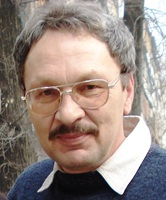
Doctor of Philosophy, Professor, Chief Researcher, Center for Comparative Politics, Institute for Philosophy, Political Science and Religious Studies, Committee of Science, Ministry of Science and Higher Education, Republic of Kazakhstan.
Postal address: 29, Kurmangazy St., 050010, Almaty, Republic of Kazakhstan.
E-mail: vlad.dunaev2011@yandex.kz
-
Mukhtarbek S.-A. Shaikemeliev Institute of Philosophy, Political Science and Religious Studies, Science Committee of the Ministry of Science and Higher Education of the Republic of Kazakhstan

Doctor of Philosophy, Associate Professor, Chief Researcher, Center for Comparative Politics, Institute for Philosophy, Political Science and Religious Studies, Committee of Science, Ministry of Science and Higher Education, Republic of Kazakhstan.
Postal address: 29, Kurmangazy St., 050010, Almaty, Republic of Kazakhstan.
E-mail: mukash2424@gmail.com
License

This work is licensed under a Creative Commons Attribution-NonCommercial 4.0 International License.

Author(s) license holder(s) grant rights for their work to the journal (grantee of a license) under the simple non-exclusive open license in accordance with Art. 1286.1 «Open license for a research work, work of literature or fine arts», Civil Code of the Russian Federation.
New Research of Tuva publishes articles under the Creative Commons Attribution-NonCommercial license (CC BY-NC).
Since it is an open license, author(s) reserve the right to upload the article to their institutional repository, submit it to another journal (if it allows republications), or republish it on their own website (in full, or in part).
However, several conditions apply here:
a) The republished version must always contain the name(s) and affiliation(s) of the author(s), the original title and the hyperlink to the original version on the New Research of Tuva website;
b) It must be in open access, free of charge, and no category of readers must be in any way whatsoever advantaged over general readership.
c) should the contribution be submitted elsewhere by its author(s) without substantial modification (30% or more of original text unchanged), the body of the article should contain a disclaimer that the original version was published in New Research of Tuva (with a link to the respective page)
The CC-BY-NC is a non-revocable license which applies worldwide and lasts for the duration of the work’s copyright.