
“Memorial to the Victims of Political Repressions of the Balkar People (1944–1957)” as a Site of Memory and a Projection of the Future
DOI:
https://doi.org/10.25178/nit.2026.2.16Keywords:
memorial, Balkars, Great Patriotic War, deportation, memory studiesAbstract
The article analyzes the significance of the Memorial to the Victims of Repressions of the Balkar People (1944–1957), opened in 2002 in Nalchik, Kabardino-Balkarian Republic (Russia). The memorial is dedicated to the tragic events associated with the deportation of the Balkar people to Central Asia and Kazakhstan; therefore, its concept is closely linked to the commemoration of the victims of deportation and political repression. Of value is its electronic database containing a list of individuals subjected to repression between 1944 and 1957. At the same time, the memorial’s exhibition presents materials from different stages of the people’s history and includes significant artifacts of Balkar material culture and folk art.
The memorial functions not only as a repository of historical memory but also as a platform for disseminating knowledge and fostering public discussion, thereby playing an important role in the cultural life of the republic. It also performs the function of intra-ethnic communication and consolidation, contributing to the development of the political and sociocultural agency of the people.
References
Anayban, Z. V., Guboglo, M. N. and Kozlov, M. S. (1999) Formation of the ethnopolitical situation. Vol. 1. Essays on the post-Soviet history of Tuva. Moscow, TsIMO. 420 p. (In Russ.).
Asanov, Yu. N. (1976) Settlements, dwellings and economic buildings of the Balkars (second half of the 19th — 1940s). Nalchik, Elbrus. 118 p. (In Russ.).
Assmann, A. (2014) The long shadow of the past: Memorial culture and historical politics. Moscow, Novoe literaturnoe obozrenie. 328 p. (In Russ.).
Barbashin, M. Yu. (2013) Institutions and ethnogenesis: institutional reproduction of ethnic identity in local communities. Rostov-on-Don, IPOPi YuFU. 356 p. (In Russ.).
Bernshtein, E. B. (1993) Architecture of the Balkar traditional dwelling. Moscow, Mezhdunarodnyi fond istorii nauki; Diksi. 160 p. (In Russ.).
Vainshtein, S. I. (1991) The world of nomads of the center of Asia. Moscow, Nauka. 296 p. (In Russ.).
Gegraev, Kh. K. (2001) Demographic consequences of the Great Patriotic War (1941–1945) and forced deportation (1944–1957) for the Balkar people. In: Collection of works of young scholars, in 2 vols. Ed. by K. K. Bauayev. Nalchik, Kabardino-Balkarian University. Vol. II. 154 p. Pp. 100–110. (In Russ.).
Gegraev, Kh. K. (2017) The religious dimension of the poetry of K. Sh. Kuliev: the elusive and the immanent. In: The artistic experience of Kaysyn Kuliev in preserving Russian cultural identity: Materials of the All-Russian scholarly conference dedicated to the 100th anniversary of the birth of the People’s Poet of Kabardino-Balkaria, laureate of State Prizes of the RSFSR and the USSR, laureate of the Lenin Prize Kaysyn Shuvaevich Kuliev (1917–1985). 27–29 October 2017. Ed. by Z. A. Kuchukova. Nalchik, Print-Tsentr. 359 p. Pp. 71–78. (In Russ.).
Guboglo, M. N. (2003) Identification of identity: ethnosociological essays. Moscow, Nauka. 764 p. (In Russ.).
Guboglo, M. N. (2013) Anthropology of everyday life. Moscow, Yazyki slavyanskoi kultury. 752 p. (In Russ.).
Girard, R. (2000) Violence and the sacred. Moscow, Novoe literaturnoe obozrenie. 400 p. (In Russ.).
Karachays. Balkars (2014) Ed. by M. D. Karaketov and Kh.-M. Sabanchiev. Moscow, Nauka. 816 p. (In Russ.).
Kushkhabiev, A. V., Shaozheva, N. A., Gegraev, Kh. K. and Tabaksoev, I. A. (2021) Key problems in the development of the sociopolitical situation in Kabardino-Balkaria in the late 20th — early 21st century. Nalchik, KBNTS RAN Publishing House. 346 p. (In Russ.).
Lamazhaa, Ch. K. (2012) Thesaurus approach to the analysis of Tuvan culture. New Research of Tuva, no. 1, pp. 25–46. (In Russ.).
The past for the present: History-memory and narratives of national identity (2020). Ed. by L. P. Repina. Moscow, Akvilon. 464 p. (In Russ.).
Sabanchiev, Kh.-M. A. (2008) Balkars: deportation and return. Nalchik, Elbrus. 436 p. (In Russ.).
Studenetskaya, E. N. (1989) Clothing of the peoples of the North Caucasus in the 18th–20th centuries. Moscow, Nauka. 288 p. (In Russ.).
Sultanova, A. M. (2016) Ornamental decor in the traditional art of the Karachays and Balkars. Nalchik, Elbrus. 120 p. (In Russ.).
Tishkov, V. A. (2021) Selected works, in 5 vols. Vol. 2: Requiem for an ethnos: Studies in sociocultural anthropology. Moscow, Nauka. 543 p. (In Russ.).
Shabaev, D. V. (1994) The truth about the deportation of the Balkars. Nalchik, Elbrus. 289 p. (In Russ.).
Eriksen, T. H. (2014) What is anthropology? Moscow, Higher School of Economics Publishing House. 238 p. (In Russ.).
Downloads
Published
Issue
Section
How to Cite
For citation:
Gegraev Kh. K. and Gegraev I. Kh. “Memorial to the Victims of Political Repressions of the Balkar People (1944–1957)” as a Site of Memory and a Projection of the Future. New Research of Tuva, 2026, no. 2, pp. 245-268 (In Russ.). DOI: https://doi.org/10.25178/nit.2026.2.16
Author Biographies
-
Khakim K. Gegraev Kabardino-Balkarian State University named after H. M. Berbekov
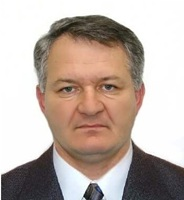
Candidate of Historical Sciences, Deputy Director for Research, Social and Humanitarian Institute, Kabardino-Balkarian State University named after Kh. M. Berbekov.
Postal address: 173 Chernyshevskogo St., 360004, Russian Federation, Nalchik.
E-mail: gegra70@mail.ru
-
Ilyas Kh. Gegraev Kabardino-Balkarian State University named after H. M. Berbekov
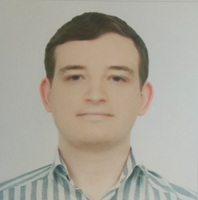
Postgraduate Student, Department of Russian History and Caucasian Studies, Social and Humanitarian Institute, Kabardino-Balkarian State University named after Kh. M. Berbekov.
Postal address: 173 Chernyshevskogo St., 360004, Russian Federation, Nalchik.
E-mail: ylgeg2001@gmail.com.
Supervisor — A. Kh. Abazov, Doctor of Historical Sciences, Professor.
Supporting Agencies
License

This work is licensed under a Creative Commons Attribution-NonCommercial 4.0 International License.

Author(s) license holder(s) grant rights for their work to the journal (grantee of a license) under the simple non-exclusive open license in accordance with Art. 1286.1 «Open license for a research work, work of literature or fine arts», Civil Code of the Russian Federation.
New Research of Tuva publishes articles under the Creative Commons Attribution-NonCommercial license (CC BY-NC).
Since it is an open license, author(s) reserve the right to upload the article to their institutional repository, submit it to another journal (if it allows republications), or republish it on their own website (in full, or in part).
However, several conditions apply here:
a) The republished version must always contain the name(s) and affiliation(s) of the author(s), the original title and the hyperlink to the original version on the New Research of Tuva website;
b) It must be in open access, free of charge, and no category of readers must be in any way whatsoever advantaged over general readership.
c) should the contribution be submitted elsewhere by its author(s) without substantial modification (30% or more of original text unchanged), the body of the article should contain a disclaimer that the original version was published in New Research of Tuva (with a link to the respective page)
The CC-BY-NC is a non-revocable license which applies worldwide and lasts for the duration of the work’s copyright.