
Structural-Semiotic and Mythopoetic Dominants of the “Almaty Text” in the Context of Russian-Language Prose of Kazakhstan
DOI:
https://doi.org/10.25178/nit.2026.3.20Keywords:
urban text, local text, Alma-Ata, Almaty, Almaty text, semiotic analysis, mythopoetic dominant, author’s worldview, Russian-language prose of Kazakhstan, Kazakh literatureAbstract
The article investigates the genesis and structure of the phenomenon of the “urban text” through semiotic, cultural, anthropological, and literary approaches. In addition to the “urban text,” it considers the concept of the “local text” using the example of the “Almaty text.” The relevance of this object of study is determined by the multicultural character of Kazakhstani literature and its search for identity, within which the “Almaty text” emerges as a conceptualization of unique cultural loci, historical and mythological dominants that reflect authors’ worldviews and give rise to a specific literary type of the city dweller. The material for the study comprises prose works by contemporary Russian-language writers of Kazakhstan: D. Nakipov, E. Klepikova, I. Odegova, L. Kalaus, Yu. Serebryansky, and M. Zemsky.
The article identifies and analyzes the key components of the “Almaty text”: cultural-historical dominants that represent images of the city in the past and present; mythopoetic images associated with the city and its history; authors’ modes of world-perception, which shape the figurative system of the “Almaty text”; and a distinctive character system that includes typological images of urban characters, among which the city itself is also included.
It is shown that the historical component is interpreted differently in the texts: E. Klepikova employs an ironic context to depict Soviet realities, while D. Nakipov expresses aversion and sarcasm toward Soviet power through his interpretation of abbreviations, which represent the author’s position. The study confirms a tendency to endow the city with anthropomorphic features and with the status of a character within the works’ character system. The mythological dominant links the city with Tengrian mythology and with the image of the concentric city (after Yu. Lotman), forming sacral and evaluative meanings, with the motif of a lost paradise becoming the principal mythological dominant. It is established that perception of the city is directly dependent on the author, with a marked contrast between lyrical nostalgia, focused on the Soviet past, and skeptical attitudes that highlight contemporary realities of mass culture.
References
Adibaeva, Sh. T. and Abuova, B. P. (2025) Symbolism of the yurt in the collection “Kazakh tales” by Yu. Serebryansky: testing a method of social reading. Vestnik KazNPU imeni Abaya. Seriya: Filologicheskie nauki, vol. 93, no. 3, pp. 49–56. (In Russ.)
Anisimov, N. O. (2018) The city in the discourse of semiotics. Juvenis Scientia, no. 12, pp. 33–35. (In Russ.) DOI: https://doi.org/10.32415/jscientia.2018.12.09
Antsiferov, N. P. (1926–1927) The book about the city. Part 3. Life of the city. Leningrad, Brockhaus and Efron. 299 p. (In Russ.)
Antsiferov, N. P. (1991) The soul of Petersburg. Petersburg of Dostoevsky. The reality and myth of Petersburg. Moscow, Kniga. 102 p. (In Russ.)
Barthes, R. (1987) Introduction to the structural analysis of narrative texts. In: Foreign aesthetics and theory of literature of the XIX–XX centuries. Treatises, articles, essays, comp. and ed. by G. K. Kosikov. Moscow, Izdatel’stvo Moskovskogo universiteta. 514 p. Pp. 387–422. (In Russ.)
Bayanbayeva, Zh. A. (2015) Alma-Ata in the prose of Yu. O. Dombrovsky. Polilingval’nost’ i transkul’turnye praktiki, no. 5, pp. 354–359. (In Russ.)
Bayanbayeva, Zh. A. (2016) The local text and its functions (on the example of the Alma-Ata local text). Vestnik Rossiyskogo universiteta druzhby narodov. Seriya: Literaturovedenie, zhurnalistika, no. 2, pp. 77–84. (In Russ.)
Vlasova, G. I. (2022a) The local “Almaty” text in the short prose of Lili Kalaus. In: Russian literature in a foreign audience: proceedings of the XIV International Scientific and Practical Conference, St. Petersburg, November 18, 2022, issue 11, ed. by T. G. Arkad’eva. Saint Petersburg, Rossiyskiy gosudarstvennyy pedagogicheskiy universitet im. A. I. Gertsena. 400 p. Pp. 106–115. (In Russ.)
Vlasova, G. I. (2022b) The local “Kazakhstan text” as a scholarly category of contemporary literary studies. In: Scientific research in the field of philology: theory, methodology, practice: a collection of materials from the international scientific and practical conference dedicated to the 60th anniversary of Professor A. E. Agmanova, ed. by E. A. Zhuravleva. Nur-Sultan, ENU im. L. N. Gumileva. 330 p. Pp. 69–74. (In Russ.)
Vlasova, G. I. and Krivoshchapova, T. V. (2018) The urban text of the southern capital of Kazakhstan in contemporary poetry and prose. In: Russian studies: yesterday, today, tomorrow. Collection of reports of the jubilee International Scientific Conference, Sofia, June 29 — July 2, 2017, ed. by V. Avramova. Sofia, Obshchestvo rusistov Bolgarii. 793 p. Pp. 517–530. (In Russ.)
Demidova, M. L. (2020) Sergey Kalmykov as a pattern of the Almaty text. Science in a Megapolis, no. 6 (22), pp. 1–3. (In Russ.)
Droysen, J. G. (2004) Historik. Lectures on the encyclopaedia and methodology of history. Saint Petersburg, Vladimir Dal’. 582 p. (In Russ.)
Ibrayeva, Zh. B. and Saparova, A. Zh. (2019) Kazakh literature in the period of independence. Vestnik Innovatsionnogo Evraziyskogo universiteta, no. 3, pp. 24–28. (In Russ.)
Kristeva, J. (2004) Selected works: The destruction of poetics. Transl. from French. Moscow, Rossiyskaya politicheskaya entsiklopediya. 656 p. (In Russ.)
Kuznetsova, A. V. and Petrulevich, I. A. (2018) The concept of the city: cultural code and narrative. Vestnik Adygeyskogo gosudarstvennogo universiteta, no. 4 (229), pp. 212–219. (In Russ.)
Lakoff, G. and Johnson, M. (2004) Metaphors we live by. Transl. from English by A. N. Baranov and A. V. Morozova. Moscow, URSS. 256 p. (In Russ.)
Levi-Strauss, C. (2011) Structural anthropology. Transl. from French by V. V. Ivanov. Moscow, AST. 536 p. (In Russ.)
Lotman, Yu. M. (1992) Symbolism of Petersburg and problems of the semiotics of the city. In: Lotman Yu. M. Selected articles, in 3 vols. Tallinn, Aleksandra. Vol. 2. 479 p. Pp. 208–221. (In Russ.)
Lotman, Yu. M. (1999) Inside thinking worlds. Man — text — semiosphere — history. Moscow, Yazyki russkoy kul’tury. 464 p. (In Russ.)
Negizbayeva, M. O. and Nurshaikhova, A. A. (2022) The topic of the Holodomor in Kazakhstan (1932–1933) in scholarship and the media. Vestnik Evraziyskogo natsional’nogo universiteta imeni L. N. Gumileva. Seriya Zhurnalistika, no. 3 (140), pp. 92–102. (In Russ.)
Novoselova, E., Iost, O. (2020) On the functioning of the Pavlodar locus in the works of S. Muzalevskiy and V. Semeryanov. Vestnik KazNPU imeni Abaya. Seriya: Filologicheskie nauki, vol. 4, no. 4 (74), pp. 260–267. (In Russ.)
Potapova, E. V. (2023) “Armenian” vs “Georgian” local texts: on the genesis and development paths. Izvestiya Smolenskogo gosudarstvennogo universiteta, no. 4 (64), pp. 41–54. (In Russ.)
Prikhodchenko, I. O. (2022) Oppositions in the local text of Pavlodar prose (based on Pavlodar memoir literature of the 1930s). Nauka o cheloveke: gumanitarnye issledovaniya, vol. 16, no. 2, pp. 60–69. (In Russ.)
Rublev, K. A. (2011) The artistic specificity of N. Chernova’s novella “Moroz-trava”. In: Russian literature in Russia and Kazakhstan: aspects of integration: proceedings of the International Scientific and Practical Conference, Barnaul, September 15–16, 2011, ed. by V. I. Gabdullina. Barnaul, Altayskiy gosudarstvennyy pedagogicheskiy universitet. 519 p. Pp. 176–185. (In Russ.)
Semenova, A. V. (2024) The poetics of the Karaganda novella by E. Zeifert “Plavil’naya lodochka”. Vestnik Kaluzhskogo universiteta, no. 3, pp. 87–93. (In Russ.)
Smirnov, S. A. (2012) Anthropology of the city. Chelovek.ru, no. 8, pp. 136–151. (In Russ.)
Temirbolat, A. B. (2023) Specifics of the development of Kazakh prose in the period of independence. Keruen, vol. 78 (1), pp. 24–38. (In Russ.) DOI: https://doi.org/10.53871/2078-8134.2023.1-02
Toporov, V. N. (2003) The Petersburg text of Russian literature: selected works. Saint Petersburg: Iskusstvo. 616 p. (In Russ.)
Khodinskaya, M. V. (2022) Biography of the city: origins of the genre. In: Philological readings. Human. Text. Discourse: proceedings of the All-Russian scientific conference with international participation dedicated to the 80th anniversary of the memory of A. A. Ukhtomsky, Yaroslavl, September 23–24, 2022, comp. by E. A. Fedorova. Yaroslavl, OOO “Filigran’”. 386 p. Pp. 321–326. (In Russ.)
Shafranskaya, E. F. (2010) The Tashkent text in Russian culture. Moscow, Art House media. 301 p. (In Russ.)
Shafranskaya, E. F. (2017) Liars and fantasists as a pattern of local texts of the twentieth century. Vestnik Moskovskogo gorodskogo pedagogicheskogo universiteta. Seriya: Filologiya. Teoriya yazyka. Yazykovoe obrazovanie, no. 1 (25), pp. 22–29. (In Russ.)
Shafranskaya, E. F. (2022) The Armenian text: poetry and prose. Filologicheskie nauki. Nauchnye doklady vysshey shkoly, no. 6s, pp. 135–143. (In Russ.) DOI: https://doi.org/10.20339/PhS.6s-22.135
Shafranskaya, E. F., Garipova, G. T. and Tokareva, N. A. (2023) The novel of Roman Senchin: the poetics of the Tuvan text. New Research of Tuva, no. 4, pp. 6–21. (In Russ.) DOI: https://doi.org/10.25178/nit.2023.4.1
Shafranskaya, E. F. and Lebedeva, E. V. (2015) Alma-Ata as a local text. Vestnik Tverskogo gosudarstvennogo universiteta. Seriya: Filologiya, no. 3, pp. 272–282. (In Russ.)
Shmakova, E. S. (2022) Urban topoi as a reflection of the author’s worldview. Keruen, vol. 74, no. 1, pp. 218–227. (In Russ.) DOI: https://doi.org/10.53871/2078-8134.2022.1-17
Shmakova, E. S., Bayzhigit, B. S. and Begaliyeva, S. B. (2024) The artistic specificity of the idiostyle of contemporary Russian-language writers of Kazakhstan: A. Zhaksylikov, A. Kim, D. Nakipov. Vestnik Rossiyskogo universiteta druzhby narodov. Seriya: Teoriya yazyka. Semiotika. Semantika, vol. 15, no. 4, pp. 1419–1442. (In Russ.) DOI: https://doi.org/10.22363/2313-2299-2024-15-4-1419-1442
Shul’zhenko, V. I. (2017) The “Caucasian text” of Russian literature: boundaries of description and paradoxes of perception. Izvestiya Dagestanskogo gosudarstvennogo pedagogicheskogo universiteta. Obshchestvennye i gumanitarnye nauki, vol. 11, no. 1, pp. 104–108. (In Russ.)
Downloads
Published
Issue
Section
How to Cite
For citation:
Shmakova E. S. and Begaliyeva S. B. Structural-Semiotic and Mythopoetic Dominants of the “Almaty Text” in the Context of Russian-Language Prose of Kazakhstan. New Research of Tuva, 2026, no. 3, pp. 346-362. (In Russ.)DOI: https://doi.org/10.25178/nit.2026.3.20
Author Biographies
-
Elena S. Shmakova M. Kh. Dulati Taraz University

PhD, Acting Associate Professor, Department of Russian Language and Literature, Taraz University named after M. Kh. Dulati.
Postal address: 7 Suleimenova St., 080007, Taraz, Republic of Kazakhstan.
E-mail: shmakovaelena87@mail.ru
-
Saule B. Begaliyeva Al-Farabi Kazakh National University
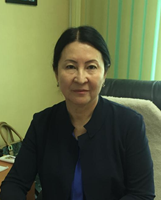
Doctor of Pedagogical Sciences, Professor, Department of Russian Philology and World Literature, Faculty of Philology, Farabi University.
Postal address: 71 Al-Farabi Av., 050040, Almaty, Republic of Kazakhstan.
E-mail: sbegalieva@mail.ru
License

This work is licensed under a Creative Commons Attribution-NonCommercial 4.0 International License.

Author(s) license holder(s) grant rights for their work to the journal (grantee of a license) under the simple non-exclusive open license in accordance with Art. 1286.1 «Open license for a research work, work of literature or fine arts», Civil Code of the Russian Federation.
New Research of Tuva publishes articles under the Creative Commons Attribution-NonCommercial license (CC BY-NC).
Since it is an open license, author(s) reserve the right to upload the article to their institutional repository, submit it to another journal (if it allows republications), or republish it on their own website (in full, or in part).
However, several conditions apply here:
a) The republished version must always contain the name(s) and affiliation(s) of the author(s), the original title and the hyperlink to the original version on the New Research of Tuva website;
b) It must be in open access, free of charge, and no category of readers must be in any way whatsoever advantaged over general readership.
c) should the contribution be submitted elsewhere by its author(s) without substantial modification (30% or more of original text unchanged), the body of the article should contain a disclaimer that the original version was published in New Research of Tuva (with a link to the respective page)
The CC-BY-NC is a non-revocable license which applies worldwide and lasts for the duration of the work’s copyright.