
Mountain civilizational nodes of Altai and the Caucasus in sociocultural dynamics and local dimensions
DOI:
https://doi.org/10.25178/nit.2026.1.6EDN:
https://elibrary.ru/CAPNPZKeywords:
comparative approach, civilization, ethnoculture, geopolitics, civilizational mountain node, Altai, CaucasusAbstract
The article substantiates the idea of “mountain civilizational nodes” and their important, often ambiguous, role in the interaction and development of peoples and civilizations, the life of local communities. It presents the experience of using a comparative approach (in its general and panoramic dimension) in a comparative analysis of the mountain territories of Altai and the Caucasus. The emphasis is placed on comparing their geopolitical and ethnocultural potential. A preliminary characterization is given of the elements of similarity and of the specific features of the geological and biospheric resources of these regions. It is noted that in these parameters the Caucasus is more similar to the Himalayas than to Altai.
The visibility of the parallels between Altai and the Caucasus in historical geopolitics is determined by their significant importance as mountainous border territories in the interaction of the megacivilization of the East, primarily represented by Turkey and China, and the megacivilization of Northern Eurasia represented by Russia. Whereas in Altai the civilizational and geopolitical influence of Russia on local peoples and communities was carried out mainly by non‑violent means, in the Caucasus this process unfolded in a more complex and dramatic way. However, in both directions Russia’s integration policy implied the preservation of the cultural and religious distinctiveness of local peoples. The effectiveness of the state’s literary and cinematographic policy in the Soviet period in strengthening intercultural dialogue among different peoples is emphasized.
The current situation, from the standpoint of actual peacebuilding potential, is assessed as favorable in Altai and problematic in the Caucasus. The authors link the prospects for the development and interaction of people with the need to overcome the temptations of all forms of fundamentalism and nationalism. The idea of Eurasian brotherhood of peoples and the right of each of them to preserve its national culture and ethnocultural uniqueness should become fundamental.
The article also touches upon issues related to existing environmental problems of Altai and the Caucasus and their sacral significance for the local population. It is concluded that, considering the significant role of mountain territories in the development and interaction of peoples and cultures, the development and implementation of a special state program for mountain regions is an urgent task.
References
Akiev, Kh. A. (2009) Peoples of the North Caucasus in the Russian-Turkish war of 1877–1878. Magas, Piligrim. 130 p. (In Russ.)
Alekseenko, N. V. (2009) Altai stonecutters. In search of Belovodye. Ust-Kamenogorsk, Librius. 100 p. (In Russ.)
Allen, W., Muratov, P. (2024) Battles for the Caucasus. The history of the war on the Turkish-Caucasian front. 1828–1921. Moscow, Tsentrpoligraf. 607 p. (In Russ.)
Ivanov, A. V., Fotieva, I. V. (eds) (2017) Altai and the Himalayas as unique cultural and biospheric regions of Eurasia. Barnaul, AltaiSAU Publishing House. 336 p. (In Russ.)
Badenkov, Yu. P. (2017) Life in the mountains. Natural and cultural diversity — diversity of development models. Moscow, GEOS. 479 p. (In Russ.)
Badenkov, Yu. P. (2021a) Mountain regions of Russia: research and development. The key role of the UNESCO MAB-6 mountain project. Voprosy Geografii, no. 152, pp. 135–166. (In Russ.) DOI: https://doi.org/10.24057/probl.geogr.152.5
Badenkov, Yu. P. (2021b) Life in the mountains according to the canons of faith and cultural heritage. Voprosy Geografii, no. 153, pp. 90–113. (In Russ.)
Osipova, N. O. (ed.) (2024) Mountains and the “mountain text” in the world historical and cultural process: collection of scientific articles. Budapest, SelmecziBt. (SBT); Kirov, Raduga-PRESS Publishing House LLC. 240 p. (In Russ.)
Grigoryev, E. I. (2005) Prometheus of the Great Steppe. Ust-Kamenogorsk, VKGTU Publishing House. 363 p. (In Russ.)
Degoev, V. V. (2001) The Great Game in the Caucasus: history and modernity. Moscow, Russkaya Panorama. 443 p. (In Russ.)
Ivanov, A. V. (2011) Sacred territories as guardians of traditional values of Eurasian peoples (the case of the Ukok Plateau in Altai and the Erdeneburen Valley in Western Mongolia). New Research of Tuva, no. 4, pp. 103–115. (In Russ.)
Ivanov, A. V., Zhuravleva, S. M. (2023) Greater Altai as a unique meeting place and cooperation of the peoples of Eurasia (to the twentieth anniversary of the establishment of the International Coordination Council “Our Common Home —Altai”). Grand Altai Research & Education, issue 2 (20), pp. 68–79. (In Russ.)
Kozhinov, V. V. (1997) The history of Rus’ and the Russian word. A contemporary view. Moscow, Moskovskiy Uchebnik-2000. 525 p. (In Russ.)
Kotlyakov, V. M., Badenkov, Yu. P. (2024) Mountain regions of Russia at the turn of the centuries. Research and development. Voprosy Geografii, no. 158, pp. 13–25. (In Russ.)
Mamedov, I. M. (2019) Russian-Turkic cultural and historical ties (10th — 21st centuries). Slavyanskiy al’manakh, no. 3–4, pp. 268–285. (In Russ.)
Mikhalev, M. S. (2022) The great eastern liminal space: transborder peoples in the state policy of Russia and China. Moscow, IFES RAS; Vost. lit. 293 p. (In Russ.)
Modorov, N. S., Datsyshen, V. G. (2009) Peoples of Sayan-Altai and Northwestern Mongolia in the struggle against Qing aggression 1644–1758. Gorno-Altaysk; Krasnoyarsk, s. n. 90 p. (In Russ.)
From the editorial board (2024). In: Osipova, N. O. (ed.) Mountains and the “mountain text” in the world historical and cultural process: collection of scientific articles. Budapest, SelmecziBt. (SBT); Kirov, Raduga-PRESS Publishing House LLC. 240 p. Pp. 5–6. (In Russ.)
Popkov, Yu. V. (2024) Anthropological turn and challenges for ethnosociology. Sotsiologicheskie Issledovaniya, no. 9, pp. 43–55. (In Russ.) DOI: https://doi.org/10.31857/S0132162524090047
Potanin, G. N. (1884) Essay VI. Siberian Cossacks. In: Picturesque Russia. Our Fatherland in its territorial, ethnic, economic, and everyday significance, vol. 11, Western Siberia. Pimenov, P. P. (ed.). St. Petersburg; Moscow, M. O. Wolf Partnership Publishing. 376 p. Pp. 107–116. (In Russ.)
Vinogradov, V. B. et al. (eds) (2009) Russian statehood in the destinies of the peoples of the North Caucasus-II, Pyatigorsk, 20–22 November 2009: proceedings of the regional scientific conference. Pyatigorsk, PGLU. 331 p. (In Russ.)
Ivanov A.V. and Fotieva I. V. (eds) (2025) Russia at the crossroads of spaces and times (an attempt at a synthetic civilizational approach). Barnaul, Novyy Format. 303 p. (In Russ.)
Ryabikov, A. N. (2009) The military-diplomatic aspect of Russia’s activity in the Caucasus in the context of international relations in the first third of the 19th century. 2nd ed., rev. and enl. Slavyansk-na-Kubani, SGPI Publishing Center. 159 p. (In Russ.)
Savitskiy, P. N. (1927) Geographical features of Russia. Part I. Vegetation and soils. Prague, Eurasian Book Publishing House. 180 p. (In Russ.)
Seferbekov, M. R. (2015) The cult of mountains among the peoples of the Caucasus. Vestnik Dagestanskogo Gosudarstvennogo Universiteta, vol. 30, issue 4, pp. 18–21. (In Russ.)
Streletskiy, V. N. (2024) Cultural and geographical aspects of the modernization of the highland societies of the North Caucasus: historical experience and post-Soviet trends. In: Osipova N. O. (ed.) Mountains and the “mountain text” in the world historical and cultural process: collection of scientific articles. Budapest, SelmecziBt. (SBT); Kirov, Raduga-PRESS Publishing House LLC. 240 p. Pp. 7–22. (In Russ.)
Tekeeva, L. K. (2013) Cosmogonic views of the Turkic-speaking peoples of the North Caucasus. Vestnik Tomskogo Gosudarstvennogo Universiteta. Istoriya, no. 1 (21), pp. 196–199. (In Russ.)
Timoshenko-Ozdemir, E. N. (2009) The North Caucasus in international politics in the second half of the 19th century. Vestnik SPbGU, series 13, issue 2, pp. 23–33. (In Russ.)
Fadeev, R. A. (2015) Sixty years of the Caucasian war. Nizhny Novgorod, Black Hundred. 152 p. (In Russ.)
Наnda, O. C. (2009) Kinnaur. Unfolding Exotic Himalayan Land. New Delhi : INDUS Publishing House. 320 p.
Rhoades R. (1997) Pathways towards a sustainable mountain agriculture for the 21st Century. International Centre for Integrated Mountain Development. 161 p.
Downloads
Published
Issue
Section
How to Cite
Ivanov A. V. and Popkov Yu. V. Mountain civilizational nodes of Altai and the Caucasus in sociocultural dynamics and local dimensions. New Research of Tuva, 2026, no. 1, pp. 118-131 (In Russ.). DOI: https://doi.org/10.25178/nit.2026.1.6
Author Biographies
-
Andrey V. Ivanov Altai State Agricultural University
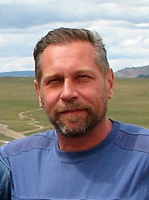
Doctor of Philosophy, Professor, Director, Center for Humanitarian Education, Altai State Agrarian University.
Postal address: 98 Krasnoarmeyskiy ave., office 419, Barnaul, 656049, Russia.
E-mail: ivanov_a_v_58@mail.ru
-
Yuri V. Popkov Institute of Philosophy and Law, SB RAS
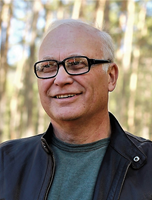
Doctor of Philosophy, Professor, Chief Researcher, Department of Social and Legal Studies, Institute of Philosophy and Law of the Siberian Branch of the Russian Academy of Sciences.
Postal address: 8 Nikolaeva St., Novosibirsk, 630090, Russia.
E-mail: yuripopkov54@mail.ru
License
Copyright (c) 2026 New Research of Tuva (edition)

This work is licensed under a Creative Commons Attribution-NonCommercial 4.0 International License.

Author(s) license holder(s) grant rights for their work to the journal (grantee of a license) under the simple non-exclusive open license in accordance with Art. 1286.1 «Open license for a research work, work of literature or fine arts», Civil Code of the Russian Federation.
New Research of Tuva publishes articles under the Creative Commons Attribution-NonCommercial license (CC BY-NC).
Since it is an open license, author(s) reserve the right to upload the article to their institutional repository, submit it to another journal (if it allows republications), or republish it on their own website (in full, or in part).
However, several conditions apply here:
a) The republished version must always contain the name(s) and affiliation(s) of the author(s), the original title and the hyperlink to the original version on the New Research of Tuva website;
b) It must be in open access, free of charge, and no category of readers must be in any way whatsoever advantaged over general readership.
c) should the contribution be submitted elsewhere by its author(s) without substantial modification (30% or more of original text unchanged), the body of the article should contain a disclaimer that the original version was published in New Research of Tuva (with a link to the respective page)
The CC-BY-NC is a non-revocable license which applies worldwide and lasts for the duration of the work’s copyright.