
Kazakhs in Kazakhstan in the second half of the twentieth century: fertility in the context of socio-economic development
DOI:
https://doi.org/10.25178/nit.2025.4.23Keywords:
Kazakhstan; Kazakhs; birth rate; migration; demographic relations; ethnic differentiation; urbanizationAbstract
The article analyzes the specific features of birth rate processes among the Kazakh population, which developed because of the socioeconomic realities prevailing in the Kazakh SSR during the 1950s–1980s. The methodological framework of this study is based on the concept of demographic modernization.
The migration influx from Soviet republics in the 1950s–1960s led to ethnic differentiation in settlement patterns and economic activity. The Kazakh population was concentrated in rural areas, while the industrial and urban development of the republic was directed primarily by the non-titular population, above all Russians. One of the consequences of this division was divergent demographic trends between the Kazakh and Russian ethnic groups.
The article characterizes the unique demographic relationships that formed among Kazakhs in rural settings. It highlights the reasons for the preservation of high fertility and presents supporting statistical data. The authors suggest that the demographic peculiarities of the Kazakhs — culminating in a demographic boom in the 1950s–1960s — were largely the result of an “artificial polyethnicity” rapidly created by the Soviet state.
The out-migration of the Slavic-European population, intensive urbanization, and the gradual filling of urban social niches by the autochthonous (Kazakh) component led to the growing influence of urban settings on demographic behaviors. This manifested in a noticeable birth rate decline among Kazakh youth in the 1970s–1980s.
References
Ablazhey, N. N. (2007) From East to East: Russian Emigration in China. Novosibirsk, Publishing House of SB RAS. 218 p. (In Russ.)
Abylkhozhin, Zh. B. (2020) The post-Stalin period in the history of Soviet Kazakhstan: A succession of doomed reforms and unrealized declarations (1953–1991). Almaty, KBTU. 468 p. (In Russ.)
Alekseenko, A. N. and Aubakirova, Zh. S. (2017) The population of Kazakhstan in the 1950s–1980s: demographic boom and features of ethno-social evolution. Vestnik NGU, Seriya: Istoriya, Filologiya, vol. 16, no. 8, pp. 127–142. (In Russ.)
Alekseenko, A. N., Aubakirova, Zh. S. and Zhanbosinova, A. S. (2019) Ethnodemographic evolution and the formation of the sovereign demographic system in Kazakhstan. Vestnik Sankt-Peterburgskogo universiteta. Seriya: Istoriya, vol. 64, no. 4, pp. 1368–1385. (In Russ.)
Altaev, A. Sh. and Zhanguttin, B. O. (2008) Brief Essays on the History of Kazakhstan. Almaty, Bastau. 244 p. (In Russ.)
Anayban, Z. V. (2011) Characteristics of ethno-demographic processes in Tuva during the Soviet period. New Research of Tuva, no. 2–3, pp. 130–150. (In Russ.)
Antonov, A. I. (1980) Sociology of Birth Rate: Theoretical and Methodological Issues. Moscow, Statistika. 271 p. (In Russ.)
Antonov, A. I., Kadyrov, Sh. Kh. and Tsuladze, G. B. (1988) Family Planning and National Traditions. Moscow, Institute of Sociology. 283 p. (In Russ.)
Antonov, A. I. and Sorokin, S. A. (2000) The Fate of the Family in Russia in the 21st Century. Moscow, Graal Publishing House. 416 p. (In Russ.)
Asylbekov, M. Kh. and Galiyev, A. B. (1991) Social and Demographic Processes in Kazakhstan (1917–1980). Alma-Ata, Gylym. 191 p. (In Russ.)
Ata-Mirzaev, O. B. (2009) Population of Uzbekistan: History and Present. Tashkent, Ijtimoiy Fikr. 223 p. (In Russ.)
Ata-Mirzaev, O. and Goldfarb, B. (1979) Prospects for Population Reproduction in Central Asia. In: D. I. Valentei (ed.) Our Future through the Eyes of a Demographer. Moscow, Statistika. 120 p. Pp. 113–119. (In Russ.)
Aubakirova, Zh. S., Makhmetova, N. A., Ualiyeva, S. K., Omyrzak, T. E. and Alekseenko, A. N. (2024) Ethnic features of fertility in Kazakhstan in the mid-20th century. Vestnik arkheologii, antropologii i etnografii, no. 2 (65), pp. 203–214. (In Russ.) DOI: https://doi.org/10.20874/2071-0437-2024-65-2-18
Borisov, V. A. (1976) Prospects for Fertility. Moscow, Statistika. 248 p. (In Russ.)
Vishnevsky, A. G. (1998) The Sickle and the Rouble: Conservative Modernization in the USSR. Moscow, OGI. 432 p. (In Russ.)
Vishnevsky, A. G. (2005) Demographic revolution. In: A. G. Vishnevsky (ed.) Selected Demographic Works. Vol. 1: Demographic Theory and Demographic History. Moscow, Nauka. 214 p. Pp. 3–214. (In Russ.)
Goryushkin, L. M. (1976) Agrarian Relations in Siberia during the Imperialist Period (1890–1917). Novosibirsk, Nauka. 342 p. (In Russ.)
Kadyrov, Sh. (1990) In defense of traditions. In: V. I. Mukomel’ (ed.) USSR: Demographic Diagnosis. Moscow, Progress. 696 p. Pp. 547–563. (In Russ.)
Kadyrov, Sh. and Medkov, V. (1986) Reproductive behaviour, demographic policy (case of Central Asian region). In: D. I. Valentei (ed.) We and Our Plans. Population Series. Moscow, Mysl’. 284 p. Pp. 220–250. (In Russ.)
Kaziev, S. Sh. (2014) The “Golden Age” of Soviet internationalism and the problems of interethnic relations in Kazakhstan (1964–1985). Vestnik Tomskogo gosudarstvennogo universiteta. Istoriya, no. 6 (32), pp. 95–101. (In Russ.)
Kasymova, S. (2006) The tradition of large motherhood among Tajiks in the context of gender and time. Vestnik Evrazii, no. 4 (34), pp. 63–84. (In Russ.)
Kozlova, E. A. (2020) Specificity of Population Reproduction in the Tyva Republic at the End of the 1980-1990s. Ethnography, Ethnology and Anthropology, vol. 13, issue 9, pp. 39–43. (In Russ.) DOI: https://doi.org/10.30853/manuscript.2020.9.7
Lamazhaa, Ch. K. (2007) A generational approach to the history of Tuva in the twentieth century. Elektronnyi nauchnyi zhurnal “Znanie. Ponimanie. Umenei”, no. 1 [online] Available at: http://www.zpu-journal.ru/e-zpu/1/Lamajaa/ (accessed: 02.05.2025). (In Russ.)
Lamazhaa, Ch. K. (2012) Regional models of archaization: scale and prospects. New Research of Tuva, no. 2, pp. 11–29. (In Russ.)
Omran, A. (1977) The epidemiological aspect of natural population movement. In: D. I. Valentei and A. P. Sudoplatov (eds.) Problemy narodonaseleniya. O demograficheskikh problemakh stran Zapada. Moscow, Progress. 303 p. Pp. 57–92. (In Russ.)
Sarsembayeva, G. A. (2014) Reproductive behavior of the Kazakh population of East Kazakhstan region in the modern period (based on sociological research). In: A. N. Alekseenko (ed.) Ethnodemographic Processes in Kazakhstan and Adjacent Territories: Collection of Scientific Papers. Ust-Kamenogorsk, Media-Alliance. 453 p. Pp. 294–308. (In Russ.)
The socio-cultural image of Soviet nations (based on ethno-sociological research results) (1986), edited by Yu. V. Arutyunyan, Yu. V. Bromlei. Moscow, Nauka. 454 p. (In Russ.)
Strumilin, S. G. (1982) Problems of Labour Economics. Moscow, Nauka. 472 p. (In Russ.)
Sztompka, P. (1996) Sociology of Social Change. Moscow, Aspect Press. 416 p. (In Russ.)
Van De Kaa, D. J. (2010) Demographic transitions. In: Yi. Zeng, ed. Encycclopedia of life support systems (EOLSS). Demography. Oxford, Eolis Publishers. Vol. 1. 395 p. Pp. 65–103.
Coleman, D. (2004) Why we don’t have to believe without doubting in the «Second Demographic Transition» — some agnostic comments. In: Vienna Yearbook of population research / Feichtinger G. (eds.). Austrian Academy of Sciences Press. Vol. 2. 340 р. Pp. 11–24.
Easterlin, R. A. (1969) Towards a socioeconomic theory of fertility: survey of recent research on economic factors in American fertility. In: Fertility and family planning: A Word View / Behrman S. J., Corsa J. L., Freedman R. (eds.). Ann Arbor, University of Michigan Press. 503 р. Pp. 127–156.
Easterlin, R. A. (1975) An economic framework for fertility analysis. Studies in family planning, vol. 6, pp. 54–63.
Landry, A. (1934) La Révolution démographique (Etudes et essais sur les problèmes de la population). Libr. du Recueil Sirey. 230 p.
Landry, А. (1945) Traité de démographie. Paris, Payot. 651 р.
Notestein, F. W. (1945) Population — The long view. In: Schultz T W (ed.) Food for the World. University of Chicago Press. 365 р. Pp. 36–57.
Notestein, F. W. (1953) Economic problems of population change. In: Proceedings of the Eighth International Conference of Agricultural Economists / Dixey R. (eds.). London: Oxford University Press. 608 p. Рp. 13–31.
Thompson, W. S. (1929) Population. American Journal of Sociology, vol. 34, no. 6, pp. 959–975.
Thompson, W. S. (1930) Population Problems. New York, McGraw-Hill. 462 p.

Published
How to Cite
For citation:
Krasnobayeva N. L., Aubakirova Zh. S. and Alekseenko A. N. Kazakhs in Kazakhstan in the second half of the twentieth century: fertility in the context of socio-economic development. New Research of Tuva, 2025, no. 4, pp. 436-450. (In Russ.). DOI: https://doi.org/10.25178/nit.2025.4.23
Issue
Section
Author Biographies
Nelli L. Krasnobayeva, D. Serikbayev East Kazakhstan Technical University

Candidate of Historical Sciences, Chief Researcher, International Research Center “Digital Social Research”, East Kazakhstan Technical University named after D. Serikbaev.
Postal address: 19 Serikbayeva St., Ust-Kamenogorsk, 070000, Republic of Kazakhstan.
E-mail: krasn_nelli@mail.ru
Zhanna S. Aubakirova, D. Serikbayev East Kazakhstan Technical University

Candidate of Historical Sciences, Associate Professor, Head, International Research Center “Digital Social Research”, East Kazakhstan Technical University named after D. Serikbaev.
Postal address: 19 Serikbayeva St., Ust-Kamenogorsk, 070000, Republic of Kazakhstan.
E-mail: zhanna_aubakirova707@inbox.ru
Aleksandr N. Alekseenko, D. Serikbayev East Kazakhstan Technical University
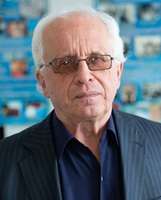
Doctor of Historical Sciences, Leading Researcher, East Kazakhstan Technical University named after D. Serikbaev.
Postal address: 19 Serikbayeva St., Ust-Kamenogorsk, 070000, Republic of Kazakhstan.
E-mail: alalexeenko56@gmail.com

This work is licensed under a Creative Commons Attribution-NonCommercial 4.0 International License.

Author(s) license holder(s) grant rights for their work to the journal (grantee of a license) under the simple non-exclusive open license in accordance with Art. 1286.1 «Open license for a research work, work of literature or fine arts», Civil Code of the Russian Federation.
New Research of Tuva publishes articles under the Creative Commons Attribution-NonCommercial license (CC BY-NC).
Since it is an open license, author(s) reserve the right to upload the article to their institutional repository, submit it to another journal (if it allows republications), or republish it on their own website (in full, or in part).
However, several conditions apply here:
a) The republished version must always contain the name(s) and affiliation(s) of the author(s), the original title and the hyperlink to the original version on the New Research of Tuva website;
b) It must be in open access, free of charge, and no category of readers must be in any way whatsoever advantaged over general readership.
c) should the contribution be submitted elsewhere by its author(s) without substantial modification (30% or more of original text unchanged), the body of the article should contain a disclaimer that the original version was published in New Research of Tuva (with a link to the respective page)
The CC-BY-NC is a non-revocable license which applies worldwide and lasts for the duration of the work’s copyright.