
Ovoo phenomenon of the Mongolians: Influencing well-being through the human–nature and human–spiritual relationships
DOI:
https://doi.org/10.25178/nit.2025.4.20Keywords:
ovoo ritual; ovoo phenomenon; well-being; human–nature relationship; human–spiritual relationship; ovoo worshippingAbstract
The Mongolian ovoo is a cairn of stones and wood branches found in a natural environment. Because of stereotypes, ovoo is only understood as a place of worship or symbol, but it is a unique way to influence well-being through the human–nature and human–spiritual relationships. Hence, the aim of our study was to review the literature and provide an overview investigating the effects of the ovoo on the well-being of the Mongolians. The ovoo phenomenon has culture-specific characteristics and philosophical aspects related to identity, tradition and conservation, but the most interesting issue is undoubtedly its influence on well-being. In 2017, the ovoo and Mongolian worshipping rituals were inscribed on UNESCO’s List of Intangible Cultural Heritage in Need of Urgent Safeguarding as part of “Mongolian traditional practices of worshipping the sacred sites”. Understanding how the ovoo influences well-being through the human–nature and human–spiritual relationships is essential for addressing current challenges. The ovoo is of a wide significance, there are many ovoos in all areas where the Mongolians live. It should be emphasized again that the ovoo ritual is not only an intangible cultural heritage, but also a phenomenon that has a positive effect on well-being by interacting between human and nature in the spiritual sphere.
References
Alcamo, J., Ash, N. J., Butler, C. D. et al. (2003) Ecosystems and human well-being : A report of the Conceptual Framework Working Group of the Millennium Ecosystem Assessment. Washington ; Covelo ; London, Island Press. xiv, 245 p.
Amarkhuu, O. (2000) Mongolian customs and laws for environmental protection. Ulaanbaatar, Khaan Printing. 225 p. (In Mongolian).
Anand, P., Hunter, G. and Smith, R. (2005) Capabilities and well-being: Evidence based on the Sen–Nussbaum approach to welfare. Social Indicators Research, vol. 74, no. 1, pp. 9–55. DOI: https://doi.org/10.1007/s11205-005-6518-z
Atwood, C. P. (2004) Encyclopedia of Mongolia and the Mongol Empire. New York, Facts on File, Inc. x, 678 p.
Atwood, C. P. (2012) Banner, otog, thousand: Appanage communities as the basic unit of traditional Mongolian society. Mongolian Studies, vol. 34, pp. 1–76.
Avner, U. (2023) Prehistoric cult sites along the desert roads. Religions, vol. 14, no. 12, art. 1472. DOI: https://doi.org/10.3390/rel14121472
Banzragch, Ch. and Sainkhuu, B. (2004) History of the Mongolian monasteries. Ulaanbaatar, Soyombo Printing. 435 p. (In Mongolian).
Bass, S. H. (2021) “They call out to their dead devils!” Erküüt and the rejection of communal rituals in a Mongol banner. Études Mongoles et Sibériennes, Centrasiatiques et Tibétaines, no. 52. DOI: https://doi.org/10.4000/emscat.5025
Batmunkh, B. and Boldbaatar, D. (2021) Mongolian wrestling (bukh) during the twelfth-fourteenth centuries. The International Journal of the History of Sport, vol. 38, no. 9, pp. 988–1007. DOI: https://doi.org/10.1080/09523367.2021.1973443
Batmunkh, B. and Enkhbat, M. (2024) Mongolian philosophical underpinnings of well-being: Mythology, shamanism and Mongolian Buddhism (before the development of modern nursing). Nursing Philosophy, vol. 25, no. 1, art. e12469. DOI: https://doi.org/10.1111/nup.12469
Bayarmaa, B. and Buyandelger, B. (2017) Mountain and ovoo worship of the Mongolians. Ulaanbaatar, Arvai Printing. 140 p. (In Mongolian).
Birtalan, Á. (1998) Typology of stone cairn obos (preliminary report, based on Mongolian fieldwork material collected in 1991–1995). In: Blondeau, A.-M. (ed.) Tibetan mountain deities, their cults and representations : Papers presented at a panel of the 7th Seminar of the International Association for Tibetan Studies (Graz, 1995). Vienna, Verlag der Österreichischen Akademie der Wissenschaften. Pp. 199–210.
Bumochir, D. (2019) Nationalist sentiments obscured by ‘pejorative labels’: Birthplace, homeland and mobilisation against mining in Mongolia. Inner Asia, vol. 21, no. 2, pp. 162–179. DOI: https://doi.org/10.1163/22105018-12340124
Buyanbat, G. (1985) The meaning of Mongolian shamanism. Huhhot, Inner Mongolian Press Committee. 189 p. (In Mongolian traditional script).
Buyandelger, B. (2009) The Mongolian mind: Metaphysics. Ulaanbaatar, Ikh Shavi Institute. 101 p. (In Mongolian).
Buyandelger, B. and Khosbayar, A. (2020) The 44 heroic epics with wrestling content. Ulaanbaatar, Arvai Press. 321 p. (In Mongolian).
Chao, O., Li, X. and Reyes-García, V. (2023) Faith, reciprocity, and balance: Inner Mongolian Ovoo offering ritual and its contribution to climate change adaptation. In: Reyes-García, V. (ed.). Routledge handbook of climate change impacts on indigenous peoples and local communities. 1st ed. London, Routledge. Pp. 348–357. DOI: https://doi.org/10.4324/9781003356837-26
Charleux, I. and Smith, M. J. (2021) Introduction to the special issue: Points of transition: Ovoo and the ritual remaking of religious, ecological, and historical politics in Inner Asia. Études Mongoles et Sibériennes, Centrasiatiques et Tibétaines, no. 52. DOI: https://doi.org/10.4000/emscat.4919
Convery, I., Bailey, C., Mort, M. and Baxter, J. (2005) Death in the wrong place? Emotional geographies of the UK 2001 foot and mouth disease epidemic. Journal of Rural Studies, vol. 21, no. 1, pp. 99–109. DOI: https://doi.org/10.1016/j.jrurstud.2004.10.003
Dal Zovo, C. (2021) Ovoo-cairns and ancient funerary mounds in the Mongolian landscape. Piling up a monumental tradition? Études Mongoles et Sibériennes, Centrasiatiques et Tibétaines, no. 52. DOI: https://doi.org/10.4000/emscat.4925
Descola, P. (2013) Beyond nature and culture. Chicago, The University of Chicago Press. xxii, 463 p.
Dulam, S. (1989) Mongolian mythological thinking. Ulaanbaatar, State Press Committee. 192 p. (In Mongolian).
Dulam, S. (1999) Mongolian symbolism. Ulaanbaatar, Admon Press. 210 p. (In Mongolian).
Dumont, A. (2021) Community, faith and politics. The ovoos of the Shinehen Buryats throughout the 20th century. Études Mongoles et Sibériennes, Centrasiatiques et Tibétaines, no. 52. DOI: https://doi.org/10.4000/emscat.5072
Erdenebaatar, Kh. (2002) Culture of square graves and khirigsuur in Mongolia. Ulaanbaatar, Soyombo Printing. 275 p. (In Mongolian).
Erdenetuya, U. (2005) Prohibitions during oboo worship ceremony. Mongolian Journal of Anthropology, Archaeology and Ethnology, vol. 1, no. 1 (242), pp. 125–131. (In Mongolian).
Erdenetuya, U. (2014) Approaches towards environmental conservation of the Mongols. Ulaanbaatar, Nuudelchin Group. 228 p. (In Mongolian).
Evans, C. and Humphrey, C. (2003) Timelessness and the monumental: The oboos of the Mergen environs, Inner Mongolia. Cambridge Archaeological Journal, vol. 13, no. 2, pp. 195–211. DOI: https://doi.org/10.1017/S095977430300012X
Ganbold, M. (2001) Altai Uriankhai traditional worship. Ulaanbaatar, National University of Mongolia. 166 p. (In Mongolian).
Gongor, D. (1978) Khalkha tovchoo: Socio-economic organization of the Khalkha Mongols (The 11th and 17th centuries). Ulaanbaatar, Press State Committee. 396 p. (In Mongolian).
Herzog, T. R., Maguire, C. P. and Nebel, M. B. (2003) Assessing the restorative components of environments. Journal of Environmental Psychology, vol. 23, no. 2, pp. 159–170. DOI: https://doi.org/10.1016/S0272-4944(02)00113-5
Howell, A. J., Dopko, R. L., Passmore, H.-A. and Buro, K. (2011) Nature connectedness: Associations with well-being and mindfulness. Personality and Individual Differences, vol. 51, no. 2, pp. 166–171. DOI: https://doi.org/10.1016/j.paid.2011.03.037
Hultkrantz, Å. (1978) Ecological and phenomenological aspects of shamanism. In: Diószegi, V. and Hoppál, M. (eds.) Shamanism in Siberia. Budapest, Akadémiai Kiadó. Pp. 27–58.
Humphrey, C. and Onon, U. (1996) Shamans and elders: Experience, knowledge and power among the Daur Mongols. Oxford ; New York, Clarendon Press. x, 396 p.
Humphrey, C., Mongush, M. and Telengid, B. (1993) Attitudes to nature in Mongolia and Tuva: A preliminary report. Nomadic Peoples, no. 33, pp. 51–61.
Hutchins, K. G. (2021) With each pass, another stone. Ovoo at the heart of heritage, environment, and conflict. Études Mongoles et Sibériennes, Centrasiatiques et Tibétaines, no. 52. DOI: https://doi.org/10.4000/emscat.5165
Jardine, A., Speldewinde, P., Carver, S. and Weinstein, P. (2007) Dryland salinity and ecosystem distress syndrome: Human health implications. EcoHealth, vol. 4, no. 1, pp. 10–17. DOI: https://doi.org/10.1007/s10393-006-0078-9
Kaczensky, P. (2007) Wildlife value orientations of rural Mongolians. Human Dimensions of Wildlife, vol. 12, no. 5, pp. 317–329. DOI: https://doi.org/10.1080/10871200701555303
Kaplan, R. (2001) The nature of the view from home: Psychological benefits. Environment and Behavior, vol. 33, no. 4, pp. 507–542. DOI: https://doi.org/10.1177/00139160121973115
Kaplan, S. (1995) The restorative benefits of nature: Toward an integrative framework. Journal of Environmental Psychology, vol. 15, no. 3, pp. 169–182. DOI: https://doi.org/10.1016/0272-4944(95)90001-2
Khurchabaatar, L. and Ujume, C. (1991) Culture of Mongolian shamanism and sacrifice. Huhhot, Inner Mongolian Cultural Press Committee. 327 p. (Mongolian traditional script).
Kirshenblatt-Gimblett, B. (2004) Intangible heritage as metacultural production. Museum International, vol. 56, no. 1–2, pp. 52–65. DOI: https://doi.org/10.1111/j.1350-0775.2004.00458.x
Kuo, F. E. (2001) Coping with poverty: Impacts of environment and attention in the inner city. Environment and Behavior, vol. 33, no. 1, pp. 5–34. DOI: https://doi.org/10.1177/00139160121972846
Lindskog, B. V. (2014) Natural calamities and ‘the Big Migration’: Challenges to the Mongolian health system in ‘the Age of the Market’. Global Public Health, vol. 9, no. 8, pp. 880–893. DOI: https://doi.org/10.1080/17441692.2014.940361
Lindskog, B. V. (2016) Ritual offerings to ovoos among nomadic Halh herders of west-central Mongolia. Études Mongoles et Sibériennes, Centrasiatiques et Tibétaines, no. 47. DOI: https://doi.org/10.4000/emscat.2740
Maller, C., Townsend, M., Pryor, A., Brown, P. and Leger, L. S. (2006) Healthy nature healthy people: ‘Contact with nature’ as an upstream health promotion intervention for populations. Health Promotion International, vol. 21, no. 1, pp. 45–54. DOI: https://doi.org/10.1093/heapro/dai032
Mansang, T. (2012) Mongolian shamanism. Huhhot, Inner Mongolian Press Committee. 308 p. (Mongolian traditional script).
Moser, A. and Korstjens, I. (2018) Series: Practical guidance to qualitative research. Part 3: Sampling, data collection and analysis. European Journal of General Practice, vol. 24, no. 1, pp. 9–18. DOI: https://doi.org/10.1080/13814788.2017.1375091
Mykhailov, T. M. (1987) Buryat shamanism: History, structure and social functions. Novosibirsk, Nauka. 287 p. (In Russ.).
Natsagdorj, Sh. (1963) History of Khalkha: A brief history of Manchu rule. Ulaanbaatar, State Press Committee. 282 p. (In Mongolian).
Newell, P. B. (1997) A cross-cultural examination of favorite places. Environment and Behavior, vol. 29, no. 4, pp. 495–514. DOI: https://doi.org/10.1177/001391659702900403
Nisbet, E. K., Zelenski, J. M. and Murphy, S. A. (2011) Happiness is in our nature: Exploring nature relatedness as a contributor to subjective well-being. Journal of Happiness Studies, vol. 12, no. 2, pp. 303–322. DOI: https://doi.org/10.1007/s10902-010-9197-7
Ochir, A., Dalai, C., Ishjamts, N., Natsagdorj, S., Shirendev, B., Boldbaatar, J., Jamsran, L., Ishdorj, T. and Tseveendorj, D. (2003) History of Mongolia. Ulaanbaatar, Mongolian Academy of Sciences. 436 p. (In Mongolian).
Ottosson, J. and Grahn, P. (2008) The role of natural settings in crisis rehabilitation: How does the level of crisis influence the response to experiences of nature with regard to measures of rehabilitation? Landscape Research, vol. 33, no. 1, pp. 51–70. DOI: https://doi.org/10.1080/01426390701773813
Palsson, G. and Swanson, H. A. (2016) Down to Earth: Geosocialities and geopolitics. Environmental Humanities, vol. 8, no. 2, pp. 149–171. DOI: https://doi.org/10.1215/22011919-3664202
Park, C. (1994) Sacred worlds: An introduction to geography and religion. London ; New York, Routledge. 352 p. DOI: https://doi.org/10.4324/9780203421055
Pískatá, J. M. (2021) On offering and forgiveness at Altan Ovoo’s national Tahilga. Études Mongoles et Sibériennes, Centrasiatiques et Tibétaines, no. 52. DOI: https://doi.org/10.4000/emscat.5119
Purev, O. (1999) Mongolian shamanism. Ulaanbaatar, Mongolian Academy of Sciences. 392 p. (In Mongolian).
Purevjav, S. (1978) A brief history of Buddhism in Mongolia. Ulaanbaatar, State Press Committee. 288 p. (In Mongolian).
Russell, R., Guerry, A. D., Balvanera, P., Gould, R. K., Basurto, X., Chan, K. M. A., Klain, S., Levine, J. and Tam, J. (2013) Humans and nature: How knowing and experiencing nature affect well-being. Annual Review of Environment and Resources, vol. 38, pp. 473–502. DOI: https://doi.org/10.1146/annurev-environ-012312-110838
Sainbileg, B. (2018) Buddhist studies in the west, past and present: Role of the Mongolian Buddhism. Proceedings of the Mongolian Academy of Sciences, vol. 58, no. 1, pp. 127–139. (In Mongolian). DOI: https://doi.org/10.5564/pmas.v58i1.978
Sainjargal, M. (2008) Mongolian worship ritual. Huhhot, Press Committee of Inner Mongolia University. 419 p. (In Chinese).
Sanjid, J. (1988) Nature conservation: Some practices of the Mongolians. Ulaanbaatar, Eruul Enkh. 54 p. (In Mongolian).
Sarangerel. (1990) Behaviours of deed mongols. Huhhot, People’s Press Committee of Inner Mongolia. 408 p. (In Mongolian traditional script).
Sneath, D. (2014) Nationalising civilisational resources: Sacred mountains and cosmopolitical ritual in Mongolia. Asian Ethnicity, vol. 15, no. 4, pp. 458–472. DOI: https://doi.org/10.1080/14631369.2014.939330
Stairs, A. (1992) Self-image, world-image: Speculations on identity from experiences with Inuit. Ethos, vol. 20, no. 1, pp. 116–126. DOI: https://doi.org/10.1525/eth.1992.20.1.02a00050
Sukhbaatar, O. (2001) Mongolian sacred mountain and water scriptures. Ulaanbaatar, Soyombo Printing. 213 p. (In Mongolian).
Sukhbaatar, О. and Tsolmon, P. (1986) A cave. Ulaanbaatar, State Press Committee. 100 p. (In Mongolian).
Thomashow, M. (1996) Ecological identity: Becoming a reflective environmentalist. Cambridge, MA, MIT Press. xxii, 228 p.
Tomikawa, R. (2006) Mongolian wrestling (bukh) and ethnicity. International Journal of Sport and Health Science, vol. 4, no. 1, pp. 103–109. DOI: https://doi.org/10.5432/ijshs.4.103
Tsogt, B. and Buyandelger, B. (2012) Mongolian wrestling culture. Ulaanbaatar, Mongolian Philosophy of Sports Federation. 119 p. (In Mongolian).
Vining, J., Merrick, M. S. and Price, E. A. (2008) The distinction between humans and nature: Human perceptions of connectedness to nature and elements of the natural and unnatural. Human Ecology Review, vol. 15, no. 1, pp. 1–11.
Watters, R. (2021) The middle of the story. Ovoos and the ecological imagination in Mongolian conservation. Études Mongoles et Sibériennes, Centrasiatiques et Tibétaines, no. 52. DOI: https://doi.org/10.4000/emscat.5194
Zinsstag, J., Schelling, E., Wyss, K. and Mahamat, M. B. (2005) Potential of cooperation between human and animal health to strengthen health systems. Lancet, vol. 366, no. 9503, pp. 2142–2145. DOI: https://doi.org/10.1016/S0140-6736(05)67731-8

Published
How to Cite
Batmunkh B., Tuya A., Sandagjav S., Unenbat M. and Shagdar I. Ovoo phenomenon of the Mongolians: Influencing well-being through the human–nature and human–spiritual relationships. New Research of Tuva, 2025, no. 4, pp. 376-393. DOI: https://doi.org/10.25178/nit.2025.4.20
Для цитирования:
Batmunkh B., Tuya A., Sandagjav S., Unenbat M. and Shagdar I. Ovoo phenomenon of the Mongolians: Influencing well-being through the human–nature and human–spiritual relationships // Новые исследования Тувы. 2025. № 4. С. 376-393. DOI: https://doi.org/10.25178/nit.2025.4.20
Issue
Section
Author Biographies
Buyandelger Batmunkh, Mongolian National University of Medical Sciences
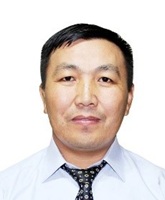
Associate Professor, Department of Basic Science, School of Nursing, Mongolian National University of Medical Sciences.
Postal address: School of Nursing, Mongolian National University of Medical Sciences, Ard Ayush Street, 6th khoroo, Bayangol district, Ulaanbaatar, Mongolia.
E-mail: buyandelger.b@mnums.edu.mn
Amgalan Tuya, Mongolian National University of Medical Sciences

Lecturer, Department of Basic Science, School of Nursing, Mongolian National University of Medical Sciences.
Postal address: School of Nursing, Mongolian National University of Medical Sciences, Ard Ayush Street, 6th khoroo, Bayangol district, Ulaanbaatar, Mongolia.
E-mail: Amgalan@mnums.edu.mn
Solongo Sandagjav, Mongolian National University of Medical Sciences

Lecturer, Department of Basic Science, School of Nursing, Mongolian National University of Medical Sciences.
Postal address: School of Nursing, Mongolian National University of Medical Sciences, Ard Ayush Street, 6th khoroo, Bayangol district, Ulaanbaatar, Mongolia.
E-mail: Solongo.s@mnums.edu.mn
Munkhdagva Unenbat, Mongolian National University of Medical Sciences
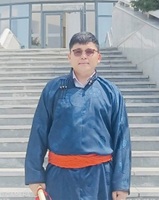
Lecturer, Department of Basic Science, School of Nursing, Mongolian National University of Medical Sciences.
Postal address: School of Nursing, Mongolian National University of Medical Sciences, Ard Ayush Street, 6th khoroo, Bayangol district, Ulaanbaatar, Mongolia.
E-mail: Munkhdagva@mnums.edu.mn
Ichinkhorloo Shagdar, Mongolian National University of Medical Sciences
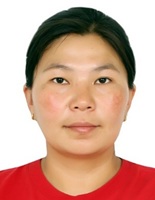
Lecturer, Department of Basic Science, School of Nursing, Mongolian National University of Medical Sciences.
Postal address: School of Nursing, Mongolian National University of Medical Sciences, Ard Ayush Street, 6th khoroo, Bayangol district, Ulaanbaatar, Mongolia.
E-mail: ichinkhorloo.sh@mnums.edu.mn

This work is licensed under a Creative Commons Attribution-NonCommercial 4.0 International License.

Author(s) license holder(s) grant rights for their work to the journal (grantee of a license) under the simple non-exclusive open license in accordance with Art. 1286.1 «Open license for a research work, work of literature or fine arts», Civil Code of the Russian Federation.
New Research of Tuva publishes articles under the Creative Commons Attribution-NonCommercial license (CC BY-NC).
Since it is an open license, author(s) reserve the right to upload the article to their institutional repository, submit it to another journal (if it allows republications), or republish it on their own website (in full, or in part).
However, several conditions apply here:
a) The republished version must always contain the name(s) and affiliation(s) of the author(s), the original title and the hyperlink to the original version on the New Research of Tuva website;
b) It must be in open access, free of charge, and no category of readers must be in any way whatsoever advantaged over general readership.
c) should the contribution be submitted elsewhere by its author(s) without substantial modification (30% or more of original text unchanged), the body of the article should contain a disclaimer that the original version was published in New Research of Tuva (with a link to the respective page)
The CC-BY-NC is a non-revocable license which applies worldwide and lasts for the duration of the work’s copyright.