
Comparative Analysis of the Formation and Development of Ethnic Press in Gagauzia and Tuva (20th–21st Centuries)
DOI:
https://doi.org/10.25178/nit.2025.4.19Keywords:
Gagauz; Tuvan; native language; Tuvan language; mass media; ethnic press; ethnic publications; tradition; ethnic culture; Turkic worldAbstract
The article presents a comparative analysis of the ethnic press of the Gagauz and Tuvan peoples — two kindred Turkic groups historically residing in geographically distant territories, namely Southern Bessarabia and Southern Siberia. Despite distinct geopolitical conditions, both communities have undergone parallel paths of development. Ethnic publications are understood as newspapers, journals, almanacs, and bulletins published in the language of the respective ethnic group; they address issues of civic life and culture, disseminate ethnic values, facilitate self-awareness of the community, promote its consolidation, and mobilize readers for the resolution of immediate tasks.
The author examines the historical evolution of Gagauz and Tuvan ethnic press from its inception in the 1920–1930s, through the periods of the “thaw”, “perestroika”, and the stage of democratization of public life. The history of the press is analyzed against a broad social backdrop and in the context of political events across the century. Parallels are drawn between the processes in Gagauzia and Tuva, similarities are revealed, and distinctive features are highlighted.
It is shown that ethnic publications not only comprehensively reflect the life of their people but also serve as principal initiators and creators of diverse forms and methods for strengthening ethnic identity. The study points out that ethnic periodicals, which unite national elites and a vast readership, also act as centers of statehood and public governance.
Comparative analysis allows the assertion that, due to the relatively larger population of Tuvans compared to the Gagauz, the formation of a stable ethnic elite, the availability of scholars in various research fields, and other resources characteristic of a titular ethnicity, the structure and reach of the Tuvan ethnic press are more advanced, conferring certain advantages.
References
Anayban, Z. V. (2024) Turkic-speaking regions of Southern Siberia: Processes of civic and ethnic identification. Orientalistika, no. 4–5, pp. 834–844. (In Russ.) DOI: https://doi.org/10.31696/2618-7043-2024-7-4-5-834-844
Anayban, Z. V., Guboglo, M. N. and Kozlov, M. S. (1999) The formation of the ethnopolitical situation. Vol. 1: Essays on the history of post-Soviet Tuva. Moscow, TsIMO. 420 p. (In Russ.)
Angeli, F. (2006) Gagauz autonomy. People and facts (1989–2005). Chisinau, Tipografia Centrala. 260 p. (In Russ.)
Angeli, F. (2007) Essays on the history of the Gagauz—descendants of the Oghuz (mid-8th — early 21st centuries). Chisinau, Tipografia Centrala. 640 p. (In Russ.)
Balakina, G. F. and Anayban, Z. V. (1995) Modern Tuva: Sociocultural and ethnic processes. Novosibirsk, Nauka. 137 p. (In Russ.)
Barsukova, A. V. (2018) Ethnic periodicals in the media system of the Volga Federal District. Mediascope, no. 1 [online] Available at: http://www.mediascope.ru/2419 (accessed: 21.03.2025). (In Russ.) DOI: https://doi.org/10.30547/mediascope.1.2018.9
Blokhin, I. N. (2013) Journalism in ethnocultural interaction. St. Petersburg, Publishing House SPbSU. 198 p. (In Russ.)
Borgoyakova, T. G. and Bitkeeva, A. N. (2020) The Tuvan language in legal and functional dimensions. New Research of Tuva, no. 1, pp. 50–61. (In Russ.) DOI: https://doi.org/10.25178/nit.2020.1.4
Bulgar, S. (2003) Gagauz destinies. Chisinau, Central Typography. 192 p. (In Russ.)
Bulgar, S. (2007) Gagauz enlighteners, writers, scholars in the 19th — early 20th centuries and the role of the Russian language in the spiritual development of the Gagauz. Rusyn, no. 2(8), pp. 138–155. (In Russ.)
Bulgar, S. S. and Dimchoglo, Yu. D. (2017) History of the Gagauz of Ukraine. Odessa, Astroprint. 748 p. (In Russ.)
Byuk, A. (2019) Historical prerequisites for the development of regional press and the general characteristics of printed media in Gagauzia. In: D. G. Palachor (ed.) The role of mass media in the development of the Gagauz language: Proceedings of the scientific-practical conference (25 March 2015, Comrat). Comrat, Marunevich Research Center of Gagauzia. 168 p. Pp. 108–128. (In Russ.)
Weber, M. (2017) Selected works. Image of society. 3rd ed., revised and enlarged, S. Ya. Levit (comp.). Moscow, St. Petersburg, Center of Humanitarian Initiatives. 767 p. (In Russ.)
Grek, I. F. (2016) Activities of P. Hilendarsky and M. Chakir: common and special features. Rusyn, no. 1(43), pp. 285–307. (In Russ.) DOI: https://doi.org/10.17223/18572685/43/18
Guboglo, M. N. (2004) The Russian language in the ethnopolitical history of the Gagauz. Moscow, Stary Sad. 432 p. (In Russ.)
Guboglo, M. N. (2006) On religious (or not) identity. In: M. N. Guboglo (ed.) Course of the changing Moldova: Materials of the I Russian-Moldovan symposium “Transformational processes in the Republic of Moldova. The post-Soviet period” (25–26 September 2006, Comrat). Comrat, Moscow, Stary Sad. 413 p. Pp. 206–231. (In Russ.)
Dashkovsky, P. K., Shershneva, E. A., Bicheldei, U. P. and Mongush, A. V. (2022) Ethnic and religious aspects of tolerance in the Republic of Tuva (based on sociological survey results). Narody i religii Evrazii, vol. 27, no. 3, pp. 122–143. (In Russ.) DOI: https://doi.org/10.14258/nreur(2022)3-09
Dorzhy, Z. Yu. and Irgit, O. Yu. (2016) Historiography of political repressions in Tuva. Vestnik Tuvinskogo gosudarstvennogo universiteta. Social and Humanitarian Sciences, no. 1, pp. 44–49. (In Russ.)
Drimba, V. (1961) Studies on the phonetics of the Gagauz language (I). Revue de linguistique, vol. VI, no. 2, pp. 239–258. (In Russ.)
Drimba, V. (1962) Studies on the phonetics of the Gagauz language (II). Revue de linguistique, vol. VII, no. 1, pp. 141–160. (In Russ.)
Drobizheva, L. M. (2006) Methodological problems of ethno-sociological research. Sotsiologicheskii zhurnal, no. 3–4, pp. 89–101. (In Russ.)
Zaionchkovskii, V. (1961) Condition and urgent tasks in the study of the Gagauz. Folia Orientalia, vol. II, pp. 43–51. (In Russ.)
History of Tuva (2007) : in 3 volumes. Edited by V. A. Lamin. Novosibirsk, Nauka. Vol. 2. 430 p. (In Russ.)
Iskhakov, R. L. (2008) The phenomenon of ethnic journalism (to the definition of the concept). Izvestiya Ural’skogo gosudarstvennogo universiteta, no. 60, pp. 93–98. (In Russ.)
Kan, V. S. (2014) Ideological preparation for Tuva joining the USSR. Vestnik Tomskogo gosudarstvennogo universiteta. Istoriya, no. 5 (31), pp. 66–69. (In Russ.)
Kan, V. S. (2021) Formation and development of the periodical press of Tuva (1924–1991). Abakan, OOO “IPP "Zhurnalist”. 272 p. (In Russ.)
Kan, V. S. (2022) New trends in the activities of Tuva’s periodical press during perestroika. Vestnik Tomskogo gosudarstvennogo universiteta. Istoriya, no. 80, pp. 28–37. (In Russ.)
Kendigelyan, M. V. (2009) Gagauz Republic: The struggle of the Gagauz for national self-determination, 1989–1995. Memoirs. Documents. Comrat, Tipografia Centrala. 605 p. (In Russ.)
Kostenko, N. (2005) Apostle Archpriest Mikhail Chakir. In: S. Bulgar (comp., app.), M. Arsenyeva (ed.) Pages from the history and literature of the Gagauz in the 19th – early 20th centuries. Chisinau, Pontos. 320 p. Pp. 75–80. (In Russ.)
Kravchenko, Yu. D. and Abrosimova, E. A. (2017) Ethnic mass media in the structure of contemporary regional journalism (setting the problem). Filologicheskie nauki. Voprosy teorii i praktiki, no. 7 (73), pt. 3, pp. 41–45. (In Russ.)
Kuzhuget, A. and Tatarintseva, M. (1993) Ethnopolitical situation in the Republic of Tyva before and after the elections to the Federal Assembly of Russia in 1993. Issledovaniya po prikladnoy i neotlozhnoy etnologii, no. 74, pp. 8–10 [online] Available at: https://static.iea.ras.ru/neotlozhka/74-Kuzhuget.pdf (accessed: 21.03.2025). (In Russ.)
Lamazhaa, Ch. K. (2011) Tuva between past and future. 2nd ed. St. Petersburg, Aleteya. 368 p. (In Russ.)
Lamazhaa, Ch. K. (2016) Tuvan ethnicity and society in ethnosociological and anthropological research. New Research of Tuva, no. 2, pp. 32–51. (In Russ.)
Lexin, V. N. (2019) Delicate topic. The national question in multiethnic Russia. Svobodnaya mysl’, no. 6 (1678), pp. 69–84. (In Russ.)
Maadyr, M. S. (2009) Magazines of Tuva. New Research of Tuva, no. 4, pp. 135–158. (In Russ.)
Maadyr, M. S. and Sedip-ool, M. M. (2020) Newspaper collection of the National Archive of the Republic of Tuva. New Research of Tuva, no. 2, pp. 87–102. (In Russ.) DOI: https://doi.org/10.25178/nit.2020.2.6
Makarova, I. A. (2013) ‘Social-philosophical approaches to the definition of the concept "ethnos"’, Vestnik ZabGU, no. 9 (100), pp. 84–92. (In Russ.)
Malkova, V. K. (2004) Ethnic aspects of journalism. From the experience of analyzing the Russian press. Moscow, Informpoligraf. 278 p. (In Russ.)
Mollerov, N. M. (2013) On the change of ruling elite and political course in the late 1920s in connection with Chinese and Mongolian events. Vestnik Tuvinskogo gosudarstvennogo universiteta. Social and Humanitarian Sciences, no. 1, pp. 24–37. (In Russ.)
Mongush, M. V. (2010) One people: Three destinies. Tuvans of Russia, Mongolia and China in comparative context. Osaka, National Museum of Ethnology. 358 p. (In Russ.)
Moshkov, V. A. (2004) Gagauz of Bendery County (Ethnographic essays and materials), edited by S. S. Bulgar. Chisinau, Tiporgrafia Centrala. 493 p. (In Russ.)
Ondar, E. M. (2016) On the features of political development of the Tuvan People’s Republic in the 1920–1930s. Vestnik TGPU, no. 12 (177), pp. 158–164. (In Russ.)
Otroshchenko, I. V. (2012) From the history of protest movements in the Tuvan People’s Republic in the first half of the 1930s. New Research of Tuva, no. 2, pp. 74–85. (In Russ.)
Otroshchenko, I. V. (2015) Language policy and cultural development in the Tuvan People’s Republic. New Research of Tuva, no. 2, pp. 16–31. (In Russ.)
Pozina, A. A. (2011) Ethnic journalism. Structural characteristics. Vestnik Moskovskogo universiteta. Seriya 10. Zhurnalistika, no. 3, pp. 52–61. (In Russ.)
Rybakov, S. E. (2001) Philosophy of ethnos. Moscow, IPK Gosluzhby. 358 p. (In Russ.)
Sat, A. K. (2013) Creation of national writing and its role in the cultural development of the Tuvan People’s Republic. Vestnik Tuvinskogo gosudarstvennogo universiteta. Social and Humanitarian Sciences, no. 1, pp. 37–40. (In Russ.)
Tanova, E. T. (2006) History of the emergence and development of the periodical press of Tuva. Kyzyl, Tuvan Book Publishing House. 96 p. (In Russ.)
Tenzin, Ch. M.-Kh. (2019) Interethnic and interconfessional relations in Tuva in dynamics. In: M. V. Badmaeva (ed.) Interethnic relations and processes in the modern world: Proceedings of the All-Russian conference with international participation dedicated to the 95th anniversary of Prof. V. I. Zateev. Ulan-Ude, Buryat State University. 236 p. Pp. 95–99. (In Russ.)
Tufar, N. Kh. (2015) Essays on the history of the Gagauz: The Comrat Republic, 1906. The Oghuz state, 9th–10th centuries. Comrat, Marunevich Research Center of Gagauzia. 68 p. (In Russ.)
Khomushku, O. M. (2024) Religions in Tuva: History and modernity. Novosibirsk, Nauka. 176 p. (In Russ.)
Chavdar’, F. (2016) Ethnocultural topics in the newspaper “Ana Sezyu” (1988–1994). In: V. Turchanu (ed.) Ethnocultural heritage of the Republic of Moldova in educating the younger generation: Abstracts of the scientific-practical conference (17 November 2016, Chisinau). Chisinau, Institute of Cultural Heritage. No. 1. 62 p. Pp. 50–51. (In Russ.)
Chakir, D. (2005) Biographical essay of the Chakir clan and surname. In: S. Bulgar (comp., app.), M. Arsenyeva (ed.) Pages from the history and literature of the Gagauz in the 19th — early 20th centuries. Chisinau, Pontos. 320 p. Pp. 25–55. (In Russ.)
Chakir, M. (2005a) History of the Gagauz of Bessarabia. In: S. Bulgar (comp., app.), M. Arsenyeva (ed.) Pages from the history and literature of the Gagauz in the 19th — early 20th centuries. Chisinau, Pontos. 320 p. Pp. 80–108. (In Russ.)
Chakir, M. (2005b) Wedding rites of the Gagauz. In: S. Bulgar (comp., app.), M. Arsenyeva (ed.) Pages from the history and literature of the Gagauz in the 19th — early 20th centuries. Chisinau, Pontos. 320 p. Pp. 109–112. (In Russ.)
Chebotar’, P. A. (2019) Retrospective: Current state of the Gagauz-language press (in Gagauz). In D. G. Palachor (ed.) The role of mass media in the development of the Gagauz language: Proceedings of the scientific-practical conference (25 March 2015, Comrat). Comrat, Marunevich Research Center of Gagauzia. 168 p. Pp. 7–12. (In Russ.)
Ethnic journalism: history and modernity (2017) / Yearbook, no. 10, edited by A. A. Gladkova, O. D. Minaeva, O. V. Smirnova, M. V. Shkondin. Moscow, Faculty of Journalism, Moscow State University. 82 p. (In Russ.)
Yakimov, O. D. (2000) Press of national regions of Siberia and the Far East: From emergence to the present day. Novosibirsk, Nauka. Siberian Publishing Firm of the RAS. 192 p. (In Russ.)

Published
How to Cite
For citation:
Mammadov S. R. Comparative Analysis of the Formation and Development of Ethnic Press in Gagauzia and Tuva (20th–21st Centuries). New Research of Tuva, 2025, no. 4, pp. 346-375. (In Russ.). DOI: https://doi.org/10.25178/nit.2025.4.19
Issue
Section
Author Biography
Sabir R. Mammadov, Baku State University
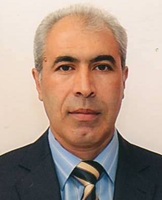
Doctor of Political Sciences, Professor, Chair of International Journalism and Information Policy, Baku State University.
Postal address: 33 Akademika Zakhida Khalilova St., Baku, AZ1148, Azerbaijan.
E-mail: sabir.rm@mail.ru

This work is licensed under a Creative Commons Attribution-NonCommercial 4.0 International License.

Author(s) license holder(s) grant rights for their work to the journal (grantee of a license) under the simple non-exclusive open license in accordance with Art. 1286.1 «Open license for a research work, work of literature or fine arts», Civil Code of the Russian Federation.
New Research of Tuva publishes articles under the Creative Commons Attribution-NonCommercial license (CC BY-NC).
Since it is an open license, author(s) reserve the right to upload the article to their institutional repository, submit it to another journal (if it allows republications), or republish it on their own website (in full, or in part).
However, several conditions apply here:
a) The republished version must always contain the name(s) and affiliation(s) of the author(s), the original title and the hyperlink to the original version on the New Research of Tuva website;
b) It must be in open access, free of charge, and no category of readers must be in any way whatsoever advantaged over general readership.
c) should the contribution be submitted elsewhere by its author(s) without substantial modification (30% or more of original text unchanged), the body of the article should contain a disclaimer that the original version was published in New Research of Tuva (with a link to the respective page)
The CC-BY-NC is a non-revocable license which applies worldwide and lasts for the duration of the work’s copyright.