Социальные и познавательные функции музыки на примере горлового пения тувинцев
DOI:
https://doi.org/10.25178/nit.2017.2.8Ключевые слова:
Тува, тувинцы, музыка, горловое пение, функции музыкиАннотация
Музыка является неотъемлемой частью практически всех человеческих культур во все времена. Музыка выполняет множество социальных и познавательных функций в обществе. В том числе горловое пение (хоомей) — наиболее известный вид музыкального искусства тувинцев — занимает важное место в общественной жизни: оно выражает общественные связи, показывает эмоции исполнителей и сопровождает религиозные ритуалы. Признание и постижение общественных и познавательных аспектов музыки могут обеспечить лучшее понимание природы горлового пения. До настоящего времени исследования указывали, что подобно языку музыка является фундаментальным каналом связи. Кроме того, музыка может модулировать нервную деятельность в мозговых структурах, связанных с чувствами и менять наши ответы. То есть дополнительно к информационным функциям, музыка имеет возможность передавать чувства. Эта способность дает возможность музыке выступать мощным механизмом для установления общественных связей и выражения ритуальной практики, поскольку способствует синхронизации внутреннего состояния индивидуумов в общественных действиях.
В заключение, автор напоминает, что упомянутые общественные познавательные функции горлового пения могут стать новым направлением для исследований в области тувинской музыки.
Библиографические ссылки
Alcorta, C. S. and Sosis, R. (2005) Ritual, emotion, and sacred symbols : The evolution of religion as an adaptive complex. Human Nature, no. 16, pp. 323–359. DOI: 10.1007/s12110-005-1014-3
Alcorta, C. S., Sosis, R. & Finkel, D. (2008) Ritual harmony: toward an evolutionary theory of music. Behavioral and Brain Sciences, no. 31, pp. 576–577.
Becker, J. (2001) Anthropological Perspectives on Music and Emotion. In: Juslin P. N. and Sloboda J. A. (Eds.) Music and Emotion. Oxford: Oxford University Press. Pp. 135–160.
Benzon, W. (2001) Beethoven's anvil : music in mind and culture. New York: Basic Books.
Blood, A. J. and Zatorre, R. J. (2001) Intensely pleasurable responses to music correlate with activity in brain regions implicated in reward and emotion. Proceedings of National Academy of Sciences, 98 (20). DOI: 10.1073/pnas.191355898
Bresin, R. and Friberg, A. (2011). Emotion rendering in music: range and characteristic values of seven musical variables. Cortex, no. 47(9), pp. 1068–1081.
Brown, S. (2000) The musilanguage model of music evolution. In: Wallin, N. L., Merker, B. and Brown S. (Eds.) The Origins of Music. Cambridge : MIT Press. Pp. 271–300.
Darwin, C. (2007) The descent of man, and selection in relation to sex (Concise ed.). New York: Plume.
Gomez, P. and Danuser, B. (2007) Relationships between musical structure and psychophysiological measures of emotion. Emotion, no. 7, pp. 377–387.
Kirschner, S. and Tomasello, M. (2010) Joint music making promotes prosocial behavior in 4-year-old children. Evolution & Human Behavior, no. 31, pp. 354–364.
Koelsch, S. (2010). Towards a neural basis of music-evoked emotions. Trends in Cognitive Sciences, no. 14, pp. 131–137.
Koelsch, S. (2011) Toward a neural basis of music perception — a review and updated model. Frontier in Psychology, no. 2, 110. DOI: 10.3389/fpsyg.2011.00110
Kraus, N. and Slater, J. (2016). Beyond Words: How Humans Communicate Through Sound. Annual Review of Psychology, no. 67, pp. 83–103. DOI: 10.1146/annurev-psych-122414-033318
Krumhansl, C. L. (2002) Music: A link between cognition and emotion Current Directions in Psychological Science, no. 11, pp. 45–50.
Levin, T. C. and Edgerton, M. E. (1999). The throat singers of Tuva. Scientific American, no. 281, pp. 80–87.
Levin, T. C. and Süzükei, V. (2006). Where rivers and mountains sing : sound, music, and nomadism in Tuva and beyond. Bloomington : Indiana University Press.
McGurk, H. and MacDonald, J. (1976) Hearing lips and seeing voice. Nature, no. 264, pp. 307–340.
McNeill, W. H. (1995) Keeping together in time : dance and drill in human history. Cambridge: Harvard University Press. 196 p.
Menon, V., Levitin, D. J. (2005). The rewards of music listening: response and physiological connectivity of the mesolimbic system. Neuroimage, no. 28, pp. 175–184. DOI: 10.1016/j.neuroimage.2005.05.053
Mithen, S. J. (2005) The singing Neanderthals : the origins of music, language, mind and body. London: Weidenfeld & Nicolson.
Panksepp, J. and Trevarthen, C. (2008). The neuroscience of emotion in music In: Malloch S. and Trevarthen C. (Eds.) Communicative Musicality : Exploring the basis of human companionship. Oxford: Oxford University Press. Pp. 105–146.
Patel, A. D. (2003) Language, music, syntax and the brain. Nature Neuroscience, no. 6, pp. 674–681. DOI: 10.1038/nn1082
Patel, A. D. (2010) Music, biological evolution, and the brain. In: Bailar M. (Ed.) Emerging Disciplines. Houston, TX: Houston UNiversity Press. Pp. 91–144.
Patel, A. D. (2012) Language, music, and the brain: a resource-sharing framework. In: Rebuschat P., Rohrmeier M., Hawkins J. and Cross I. (Eds.), Language and Music as Cognitive Systems. Oxford: Oxford University Press. Pp. 204–223.
Pegg, C. (1992) Mongolian conceptualizations of overtone Singing. British Journal of Ethnomusicology, no. 1, pp. 31–54. DOI: 10.1080/09681229208567199
Pinker, S. (1999) How the mind works. Annals of the New York Academy of Sciences, 882, pp. 119–127. DOI: 10.1111/j.1749-6632.1999.tb08538.x
Richter, J. and Ostovar, R. (2016). "It Don't Mean a Thing if It Ain't Got that Swing" — an Alternative Concept for Understanding the Evolution of Dance and Music in Human Beings. Frontier in Human Neuroscience, 10, 485. DOI: 10.3389/fnhum.2016.00485
Roederer, J. G. (1984) The search for a survival value of music. Music Perception, no. 1, pp. 350–356. DOI: 10.2307/40285265
Scherer, K. R. (1995) Expression of emotion in voice and music. Journal of Voice, no. 9, pp. 235–248.
Sloboda, J. A. and O'Neill, S. A. (2001) Emotions in everyday listening to music. In: Juslin P. N. and Sloboda J. A. (Eds.) Music and Emotion: Theory and Research. Oxford: Oxford University Press. Pp. 415–429.
Tillmann, B. (2012) Music and language perception: expectations, structural integration, and cognitive sequencing. Topic in Cognitive Science, no. 4(4), pp. 568–584. DOI: 10.1111/j.1756-8765.2012.01209.x
Trehub, S. E. (2003) The developmental origins of musicality. Nature Neuroscience, no. 6, pp. 669–673. DOI: 10.1038/nn1084
Trehub, S. E., Thorpe, L. A. and Trainor, L. J. (1990) Infant's perception of good and bad melodies. Psychomusicology, 9 (1), pp. 5–19.
Tsay, C. J. (2013) Sight over sound in the judgment of music performance. Proceedings of National Academy of Sciences, no. 110, pp. 14580–14585. DOI: 10.1073/pnas.1221454110
Van Tongeren, M. C. (2002) Overtone singing : physics and metaphysics of harmonics in east and west. Amsterdam : Fusica. ISBN 90-807163-1-6
Zentner, M. R. and Kagan, J. (1996) Perception of music by infants. Nature, 383, 29. DOI:10.1038/383029a0
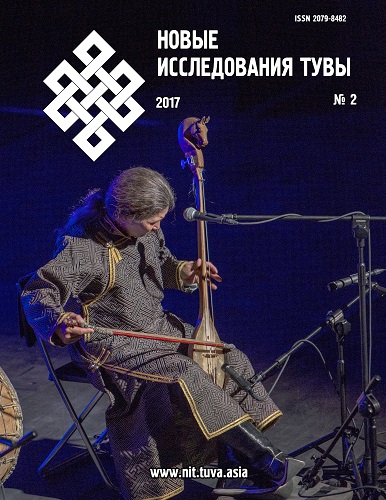
Загрузки
Опубликован
Выпуск
Раздел
Как цитировать
Биография автора
-
Шень-Моу Сюй Национальный Университет Чжэнчжи

Научный сотрудник, Центр интегративных исследований тела, разума и культуры, Национальный Университет Чжэнчжи, г. Тайбэй, Тайвань.
Адрес: 49 Fanglan Rd., Da’an Dist, Taipei, 10617, Taiwan (R.O.C).
Email: smhsu@ntu.edu.tw
Лицензия

Автор (лицензиар) произведения предоставляет простую (неисключительную) лицензию на использование редакцией (лицензиатом) произведения науки, который заключается в упрощённом порядке (открытая лицензия), согласно ст. 1286.1. «Открытая лицензия на использование произведения науки, литературы или искусства» Гражданского кодекса Российской Федерации.
В нашем издании публикуемые материалы доступны по лицензии Creative Commons «Attribution-NonCommercial» («Атрибуция — Некоммерческое использование») — CC BY-NC.
Т. к. лицензия открытая, автор имеет право разместить статью после ее выхода на своем сайте, читатель может скопировать и разместить на своих персональных ресурсах, в том числе в виде выдержек, конспектов, но:
а) обязательно должно быть указано ФИО автора, неизмененное название статьи и гиперссылка на первоисточник (журнал «Новые исследования Тувы»),
б) размещающий не имеет права брать деньги за доступ к этому материалу или каким бы то ни было образом давать преимущество одним читателям над другими,
в) при перепечатке автором текста статьи без значительных изменений (если сохраняется 30% текста или более) должно быть указано, что первая редакция статьи вышла в журнале «Новые исследования Тувы» и сделана соответствующая ссылка.
Лицензия действует по всему миру, длится в течение срока авторских прав на произведение, является неотзывной.