Феномен обо у монголов: влияние на благополучие через взаимоотношения человека с природой и духовным миром
DOI:
https://doi.org/10.25178/nit.2025.4.20Ключевые слова:
обряд обо, феномен обо, благополучие, взаимоотношение человека и природы, взаимоотношение человека и духов, поклонение обоАннотация
Монгольское обо — это рукотворная груда камней и веток деревьев, которая встречается в естественной среде. Вследствие стереотипов обо воспринимается только как место поклонения или символ, но это уникальный способ влияния на благополучие посредством взаимоотношений человека с природой и духами. Таким образом, цель нашего исследования —проанализировать литературу, представить ее общий обзор и изучить влияние обо на благополучие монголов. Феномен обо имеет специфические культурные особенности и философские аспекты, связанные с идентичностью, традициями и сохранением природы, но самым интересным вопросом, несомненно, является его влияние на благополучие людей. В 2017 г. обо и монгольские обряды поклонения были внесены в Список нематериального культурного наследия человечества, нуждающегося в срочной охране ЮНЕСКО как часть «монгольских традиционных практик поклонения священным местам». Понимание того, как обо влияет на благополучие через взаимоотношения человека с природой и духовным миром, существенно для решения современных вызовов. Обо имеют большое значение, их много во всех районах проживания монголов. Следует еще раз подчеркнуть, что обряд обо — это не только нематериальное культурное наследие, но и явление, которое положительно влияет на благополучие благодаря взаимодействию человека и природы в духовной сфере.
Библиографические ссылки
Alcamo, J., Ash, N. J., Butler, C. D. et al. (2003) Ecosystems and human well-being : A report of the Conceptual Framework Working Group of the Millennium Ecosystem Assessment. Washington ; Covelo ; London, Island Press. xiv, 245 p.
Amarkhuu, O. (2000) Mongolian customs and laws for environmental protection. Ulaanbaatar, Khaan Printing. 225 p. (In Mongolian).
Anand, P., Hunter, G. and Smith, R. (2005) Capabilities and well-being: Evidence based on the Sen–Nussbaum approach to welfare. Social Indicators Research, vol. 74, no. 1, pp. 9–55. DOI: https://doi.org/10.1007/s11205-005-6518-z
Atwood, C. P. (2004) Encyclopedia of Mongolia and the Mongol Empire. New York, Facts on File, Inc. x, 678 p.
Atwood, C. P. (2012) Banner, otog, thousand: Appanage communities as the basic unit of traditional Mongolian society. Mongolian Studies, vol. 34, pp. 1–76.
Avner, U. (2023) Prehistoric cult sites along the desert roads. Religions, vol. 14, no. 12, art. 1472. DOI: https://doi.org/10.3390/rel14121472
Banzragch, Ch. and Sainkhuu, B. (2004) History of the Mongolian monasteries. Ulaanbaatar, Soyombo Printing. 435 p. (In Mongolian).
Bass, S. H. (2021) “They call out to their dead devils!” Erküüt and the rejection of communal rituals in a Mongol banner. Études Mongoles et Sibériennes, Centrasiatiques et Tibétaines, no. 52. DOI: https://doi.org/10.4000/emscat.5025
Batmunkh, B. and Boldbaatar, D. (2021) Mongolian wrestling (bukh) during the twelfth-fourteenth centuries. The International Journal of the History of Sport, vol. 38, no. 9, pp. 988–1007. DOI: https://doi.org/10.1080/09523367.2021.1973443
Batmunkh, B. and Enkhbat, M. (2024) Mongolian philosophical underpinnings of well-being: Mythology, shamanism and Mongolian Buddhism (before the development of modern nursing). Nursing Philosophy, vol. 25, no. 1, art. e12469. DOI: https://doi.org/10.1111/nup.12469
Bayarmaa, B. and Buyandelger, B. (2017) Mountain and ovoo worship of the Mongolians. Ulaanbaatar, Arvai Printing. 140 p. (In Mongolian).
Birtalan, Á. (1998) Typology of stone cairn obos (preliminary report, based on Mongolian fieldwork material collected in 1991–1995). In: Blondeau, A.-M. (ed.) Tibetan mountain deities, their cults and representations : Papers presented at a panel of the 7th Seminar of the International Association for Tibetan Studies (Graz, 1995). Vienna, Verlag der Österreichischen Akademie der Wissenschaften. Pp. 199–210.
Bumochir, D. (2019) Nationalist sentiments obscured by ‘pejorative labels’: Birthplace, homeland and mobilisation against mining in Mongolia. Inner Asia, vol. 21, no. 2, pp. 162–179. DOI: https://doi.org/10.1163/22105018-12340124
Buyanbat, G. (1985) The meaning of Mongolian shamanism. Huhhot, Inner Mongolian Press Committee. 189 p. (In Mongolian traditional script).
Buyandelger, B. (2009) The Mongolian mind: Metaphysics. Ulaanbaatar, Ikh Shavi Institute. 101 p. (In Mongolian).
Buyandelger, B. and Khosbayar, A. (2020) The 44 heroic epics with wrestling content. Ulaanbaatar, Arvai Press. 321 p. (In Mongolian).
Chao, O., Li, X. and Reyes-García, V. (2023) Faith, reciprocity, and balance: Inner Mongolian Ovoo offering ritual and its contribution to climate change adaptation. In: Reyes-García, V. (ed.). Routledge handbook of climate change impacts on indigenous peoples and local communities. 1st ed. London, Routledge. Pp. 348–357. DOI: https://doi.org/10.4324/9781003356837-26
Charleux, I. and Smith, M. J. (2021) Introduction to the special issue: Points of transition: Ovoo and the ritual remaking of religious, ecological, and historical politics in Inner Asia. Études Mongoles et Sibériennes, Centrasiatiques et Tibétaines, no. 52. DOI: https://doi.org/10.4000/emscat.4919
Convery, I., Bailey, C., Mort, M. and Baxter, J. (2005) Death in the wrong place? Emotional geographies of the UK 2001 foot and mouth disease epidemic. Journal of Rural Studies, vol. 21, no. 1, pp. 99–109. DOI: https://doi.org/10.1016/j.jrurstud.2004.10.003
Dal Zovo, C. (2021) Ovoo-cairns and ancient funerary mounds in the Mongolian landscape. Piling up a monumental tradition? Études Mongoles et Sibériennes, Centrasiatiques et Tibétaines, no. 52. DOI: https://doi.org/10.4000/emscat.4925
Descola, P. (2013) Beyond nature and culture. Chicago, The University of Chicago Press. xxii, 463 p.
Dulam, S. (1989) Mongolian mythological thinking. Ulaanbaatar, State Press Committee. 192 p. (In Mongolian).
Dulam, S. (1999) Mongolian symbolism. Ulaanbaatar, Admon Press. 210 p. (In Mongolian).
Dumont, A. (2021) Community, faith and politics. The ovoos of the Shinehen Buryats throughout the 20th century. Études Mongoles et Sibériennes, Centrasiatiques et Tibétaines, no. 52. DOI: https://doi.org/10.4000/emscat.5072
Erdenebaatar, Kh. (2002) Culture of square graves and khirigsuur in Mongolia. Ulaanbaatar, Soyombo Printing. 275 p. (In Mongolian).
Erdenetuya, U. (2005) Prohibitions during oboo worship ceremony. Mongolian Journal of Anthropology, Archaeology and Ethnology, vol. 1, no. 1 (242), pp. 125–131. (In Mongolian).
Erdenetuya, U. (2014) Approaches towards environmental conservation of the Mongols. Ulaanbaatar, Nuudelchin Group. 228 p. (In Mongolian).
Evans, C. and Humphrey, C. (2003) Timelessness and the monumental: The oboos of the Mergen environs, Inner Mongolia. Cambridge Archaeological Journal, vol. 13, no. 2, pp. 195–211. DOI: https://doi.org/10.1017/S095977430300012X
Ganbold, M. (2001) Altai Uriankhai traditional worship. Ulaanbaatar, National University of Mongolia. 166 p. (In Mongolian).
Gongor, D. (1978) Khalkha tovchoo: Socio-economic organization of the Khalkha Mongols (The 11th and 17th centuries). Ulaanbaatar, Press State Committee. 396 p. (In Mongolian).
Herzog, T. R., Maguire, C. P. and Nebel, M. B. (2003) Assessing the restorative components of environments. Journal of Environmental Psychology, vol. 23, no. 2, pp. 159–170. DOI: https://doi.org/10.1016/S0272-4944(02)00113-5
Howell, A. J., Dopko, R. L., Passmore, H.-A. and Buro, K. (2011) Nature connectedness: Associations with well-being and mindfulness. Personality and Individual Differences, vol. 51, no. 2, pp. 166–171. DOI: https://doi.org/10.1016/j.paid.2011.03.037
Hultkrantz, Å. (1978) Ecological and phenomenological aspects of shamanism. In: Diószegi, V. and Hoppál, M. (eds.) Shamanism in Siberia. Budapest, Akadémiai Kiadó. Pp. 27–58.
Humphrey, C. and Onon, U. (1996) Shamans and elders: Experience, knowledge and power among the Daur Mongols. Oxford ; New York, Clarendon Press. x, 396 p.
Humphrey, C., Mongush, M. and Telengid, B. (1993) Attitudes to nature in Mongolia and Tuva: A preliminary report. Nomadic Peoples, no. 33, pp. 51–61.
Hutchins, K. G. (2021) With each pass, another stone. Ovoo at the heart of heritage, environment, and conflict. Études Mongoles et Sibériennes, Centrasiatiques et Tibétaines, no. 52. DOI: https://doi.org/10.4000/emscat.5165
Jardine, A., Speldewinde, P., Carver, S. and Weinstein, P. (2007) Dryland salinity and ecosystem distress syndrome: Human health implications. EcoHealth, vol. 4, no. 1, pp. 10–17. DOI: https://doi.org/10.1007/s10393-006-0078-9
Kaczensky, P. (2007) Wildlife value orientations of rural Mongolians. Human Dimensions of Wildlife, vol. 12, no. 5, pp. 317–329. DOI: https://doi.org/10.1080/10871200701555303
Kaplan, R. (2001) The nature of the view from home: Psychological benefits. Environment and Behavior, vol. 33, no. 4, pp. 507–542. DOI: https://doi.org/10.1177/00139160121973115
Kaplan, S. (1995) The restorative benefits of nature: Toward an integrative framework. Journal of Environmental Psychology, vol. 15, no. 3, pp. 169–182. DOI: https://doi.org/10.1016/0272-4944(95)90001-2
Khurchabaatar, L. and Ujume, C. (1991) Culture of Mongolian shamanism and sacrifice. Huhhot, Inner Mongolian Cultural Press Committee. 327 p. (Mongolian traditional script).
Kirshenblatt-Gimblett, B. (2004) Intangible heritage as metacultural production. Museum International, vol. 56, no. 1–2, pp. 52–65. DOI: https://doi.org/10.1111/j.1350-0775.2004.00458.x
Kuo, F. E. (2001) Coping with poverty: Impacts of environment and attention in the inner city. Environment and Behavior, vol. 33, no. 1, pp. 5–34. DOI: https://doi.org/10.1177/00139160121972846
Lindskog, B. V. (2014) Natural calamities and ‘the Big Migration’: Challenges to the Mongolian health system in ‘the Age of the Market’. Global Public Health, vol. 9, no. 8, pp. 880–893. DOI: https://doi.org/10.1080/17441692.2014.940361
Lindskog, B. V. (2016) Ritual offerings to ovoos among nomadic Halh herders of west-central Mongolia. Études Mongoles et Sibériennes, Centrasiatiques et Tibétaines, no. 47. DOI: https://doi.org/10.4000/emscat.2740
Maller, C., Townsend, M., Pryor, A., Brown, P. and Leger, L. S. (2006) Healthy nature healthy people: ‘Contact with nature’ as an upstream health promotion intervention for populations. Health Promotion International, vol. 21, no. 1, pp. 45–54. DOI: https://doi.org/10.1093/heapro/dai032
Mansang, T. (2012) Mongolian shamanism. Huhhot, Inner Mongolian Press Committee. 308 p. (Mongolian traditional script).
Moser, A. and Korstjens, I. (2018) Series: Practical guidance to qualitative research. Part 3: Sampling, data collection and analysis. European Journal of General Practice, vol. 24, no. 1, pp. 9–18. DOI: https://doi.org/10.1080/13814788.2017.1375091
Mykhailov, T. M. (1987) Buryat shamanism: History, structure and social functions. Novosibirsk, Nauka. 287 p. (In Russ.).
Natsagdorj, Sh. (1963) History of Khalkha: A brief history of Manchu rule. Ulaanbaatar, State Press Committee. 282 p. (In Mongolian).
Newell, P. B. (1997) A cross-cultural examination of favorite places. Environment and Behavior, vol. 29, no. 4, pp. 495–514. DOI: https://doi.org/10.1177/001391659702900403
Nisbet, E. K., Zelenski, J. M. and Murphy, S. A. (2011) Happiness is in our nature: Exploring nature relatedness as a contributor to subjective well-being. Journal of Happiness Studies, vol. 12, no. 2, pp. 303–322. DOI: https://doi.org/10.1007/s10902-010-9197-7
Ochir, A., Dalai, C., Ishjamts, N., Natsagdorj, S., Shirendev, B., Boldbaatar, J., Jamsran, L., Ishdorj, T. and Tseveendorj, D. (2003) History of Mongolia. Ulaanbaatar, Mongolian Academy of Sciences. 436 p. (In Mongolian).
Ottosson, J. and Grahn, P. (2008) The role of natural settings in crisis rehabilitation: How does the level of crisis influence the response to experiences of nature with regard to measures of rehabilitation? Landscape Research, vol. 33, no. 1, pp. 51–70. DOI: https://doi.org/10.1080/01426390701773813
Palsson, G. and Swanson, H. A. (2016) Down to Earth: Geosocialities and geopolitics. Environmental Humanities, vol. 8, no. 2, pp. 149–171. DOI: https://doi.org/10.1215/22011919-3664202
Park, C. (1994) Sacred worlds: An introduction to geography and religion. London ; New York, Routledge. 352 p. DOI: https://doi.org/10.4324/9780203421055
Pískatá, J. M. (2021) On offering and forgiveness at Altan Ovoo’s national Tahilga. Études Mongoles et Sibériennes, Centrasiatiques et Tibétaines, no. 52. DOI: https://doi.org/10.4000/emscat.5119
Purev, O. (1999) Mongolian shamanism. Ulaanbaatar, Mongolian Academy of Sciences. 392 p. (In Mongolian).
Purevjav, S. (1978) A brief history of Buddhism in Mongolia. Ulaanbaatar, State Press Committee. 288 p. (In Mongolian).
Russell, R., Guerry, A. D., Balvanera, P., Gould, R. K., Basurto, X., Chan, K. M. A., Klain, S., Levine, J. and Tam, J. (2013) Humans and nature: How knowing and experiencing nature affect well-being. Annual Review of Environment and Resources, vol. 38, pp. 473–502. DOI: https://doi.org/10.1146/annurev-environ-012312-110838
Sainbileg, B. (2018) Buddhist studies in the west, past and present: Role of the Mongolian Buddhism. Proceedings of the Mongolian Academy of Sciences, vol. 58, no. 1, pp. 127–139. (In Mongolian). DOI: https://doi.org/10.5564/pmas.v58i1.978
Sainjargal, M. (2008) Mongolian worship ritual. Huhhot, Press Committee of Inner Mongolia University. 419 p. (In Chinese).
Sanjid, J. (1988) Nature conservation: Some practices of the Mongolians. Ulaanbaatar, Eruul Enkh. 54 p. (In Mongolian).
Sarangerel. (1990) Behaviours of deed mongols. Huhhot, People’s Press Committee of Inner Mongolia. 408 p. (In Mongolian traditional script).
Sneath, D. (2014) Nationalising civilisational resources: Sacred mountains and cosmopolitical ritual in Mongolia. Asian Ethnicity, vol. 15, no. 4, pp. 458–472. DOI: https://doi.org/10.1080/14631369.2014.939330
Stairs, A. (1992) Self-image, world-image: Speculations on identity from experiences with Inuit. Ethos, vol. 20, no. 1, pp. 116–126. DOI: https://doi.org/10.1525/eth.1992.20.1.02a00050
Sukhbaatar, O. (2001) Mongolian sacred mountain and water scriptures. Ulaanbaatar, Soyombo Printing. 213 p. (In Mongolian).
Sukhbaatar, О. and Tsolmon, P. (1986) A cave. Ulaanbaatar, State Press Committee. 100 p. (In Mongolian).
Thomashow, M. (1996) Ecological identity: Becoming a reflective environmentalist. Cambridge, MA, MIT Press. xxii, 228 p.
Tomikawa, R. (2006) Mongolian wrestling (bukh) and ethnicity. International Journal of Sport and Health Science, vol. 4, no. 1, pp. 103–109. DOI: https://doi.org/10.5432/ijshs.4.103
Tsogt, B. and Buyandelger, B. (2012) Mongolian wrestling culture. Ulaanbaatar, Mongolian Philosophy of Sports Federation. 119 p. (In Mongolian).
Vining, J., Merrick, M. S. and Price, E. A. (2008) The distinction between humans and nature: Human perceptions of connectedness to nature and elements of the natural and unnatural. Human Ecology Review, vol. 15, no. 1, pp. 1–11.
Watters, R. (2021) The middle of the story. Ovoos and the ecological imagination in Mongolian conservation. Études Mongoles et Sibériennes, Centrasiatiques et Tibétaines, no. 52. DOI: https://doi.org/10.4000/emscat.5194
Zinsstag, J., Schelling, E., Wyss, K. and Mahamat, M. B. (2005) Potential of cooperation between human and animal health to strengthen health systems. Lancet, vol. 366, no. 9503, pp. 2142–2145. DOI: https://doi.org/10.1016/S0140-6736(05)67731-8
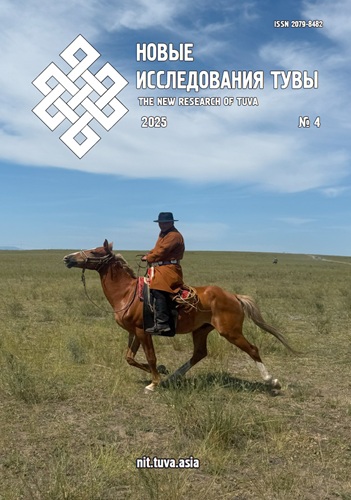
Загрузки
Опубликован
Выпуск
Раздел
Как цитировать
Batmunkh B., Tuya A., Sandagjav S., Unenbat M. and Shagdar I. Ovoo phenomenon of the Mongolians: Influencing well-being through the human–nature and human–spiritual relationships. New Research of Tuva, 2025, no. 4, pp. 376-393. DOI: https://doi.org/10.25178/nit.2025.4.20
Для цитирования:
Batmunkh B., Tuya A., Sandagjav S., Unenbat M. and Shagdar I. Ovoo phenomenon of the Mongolians: Influencing well-being through the human–nature and human–spiritual relationships // Новые исследования Тувы. 2025. № 4. С. 376-393. DOI: https://doi.org/10.25178/nit.2025.4.20
Биографии авторов
-
Буянделгер Батмунх Mongolian National University of Medical Sciences
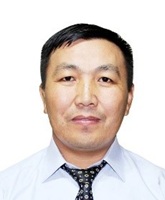
доцент кафедры фундаментальных наук Школы сестринского дела Монгольского национального университета медицинских наук.
Адрес: Школа сестринского дела, Монгольский национальный университет медицинских наук, ул. Ард Аюш, 6-й квартал, Баянгольский район, Улан-Батор, Монголия.
Эл. адреc: buyandelger.b@mnums.edu.mn
-
Амгалан Туяа Mongolian National University of Medical Sciences

Преподаватель кафедры фундаментальных наук Школы сестринского дела Монгольского национального университета медицинских наук.
Адрес: Школа сестринского дела, Монгольский национальный университет медицинских наук, ул. Ард Аюш, 6-й квартал, Баянгольский район, Улан-Батор, Монголия.
Эл. адреc: Amgalan@mnums.edu.mn
-
Солонго Сандагджав Mongolian National University of Medical Sciences

Преподаватель кафедры фундаментальных наук Школы сестринского дела Монгольского национального университета медицинских наук.
Адрес: Школа сестринского дела, Монгольский национальный университет медицинских наук, ул. Ард Аюш, 6-й квартал, Баянгольский район, Улан-Батор, Монголия.
Эл. адреc: Solongo.s@mnums.edu.mn
-
Мунхдагва Уненбат Mongolian National University of Medical Sciences
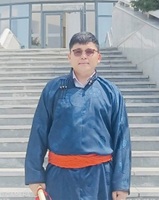
Преподаватель кафедры фундаментальных наук Школы сестринского дела Монгольского национального университета медицинских наук.
Адрес: Школа сестринского дела, Монгольский национальный университет медицинских наук, ул. Ард Аюш, 6-й квартал, Баянгольский район, Улан-Батор, Монголия.
Эл. адреc: Munkhdagva@mnums.edu.mn
-
Ичинхорло Шагдар Mongolian National University of Medical Sciences
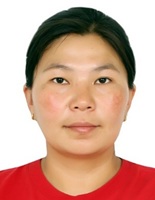
Преподаватель кафедры фундаментальных наук Школы сестринского дела Монгольского национального университета медицинских наук.
Адрес: Школа сестринского дела, Монгольский национальный университет медицинских наук, ул. Ард Аюш, 6-й квартал, Баянгольский район, Улан-Батор, Монголия.
Эл. адреc: ichinkhorloo.sh@mnums.edu.mn
Лицензия

Это произведение доступно по лицензии Creative Commons «Attribution-NonCommercial» («Атрибуция — Некоммерческое использование») 4.0 Всемирная.

Автор (лицензиар) произведения предоставляет простую (неисключительную) лицензию на использование редакцией (лицензиатом) произведения науки, который заключается в упрощённом порядке (открытая лицензия), согласно ст. 1286.1. «Открытая лицензия на использование произведения науки, литературы или искусства» Гражданского кодекса Российской Федерации.
В нашем издании публикуемые материалы доступны по лицензии Creative Commons «Attribution-NonCommercial» («Атрибуция — Некоммерческое использование») — CC BY-NC.
Т. к. лицензия открытая, автор имеет право разместить статью после ее выхода на своем сайте, читатель может скопировать и разместить на своих персональных ресурсах, в том числе в виде выдержек, конспектов, но:
а) обязательно должно быть указано ФИО автора, неизмененное название статьи и гиперссылка на первоисточник (журнал «Новые исследования Тувы»),
б) размещающий не имеет права брать деньги за доступ к этому материалу или каким бы то ни было образом давать преимущество одним читателям над другими,
в) при перепечатке автором текста статьи без значительных изменений (если сохраняется 30% текста или более) должно быть указано, что первая редакция статьи вышла в журнале «Новые исследования Тувы» и сделана соответствующая ссылка.
Лицензия действует по всему миру, длится в течение срока авторских прав на произведение, является неотзывной.